As the Cessna 208 descended through the thick layer of clouds, the world outside the window transformed. The monotonous grey gave way to an endless expanse of white, broken only by the dark, jagged teeth of spruce trees. We were landing in Fairbanks, Alaska, in the heart of winter, and the air that hit me as I stepped onto the tarmac was a physical shock—a crisp, clean cold that seared the lungs and made the very air seem to crackle. This wasn't just a trip; it was a pilgrimage for light, a seven-day quest to witness the most elusive and magnificent atmospheric phenomenon on Earth: the Aurora Borealis.
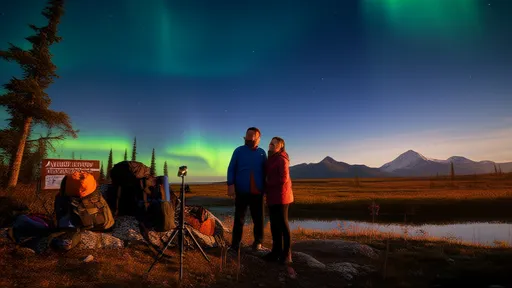
The first two days were an exercise in patience and acclimatization. Fairbanks in February is a study in contrasts. The sun, a weak, low-hanging orb, offers a few hours of muted daylight, casting long, blue shadows across the snow-blanketed landscape. This twilight period is deceptively beautiful but serves as a mere prelude to the main event. Our guide, a seasoned local named Mark with a face weathered by decades of Arctic winters, emphasized the importance of managing expectations. "The Aurora is a wild animal," he told our small group over mugs of steaming black coffee. "You can't command it. You can only prepare, be patient, and hope it decides to dance for you." Our preparation involved scouting locations during the day, learning how to operate our cameras in sub-zero temperatures, and, most importantly, mastering the art of staying warm.
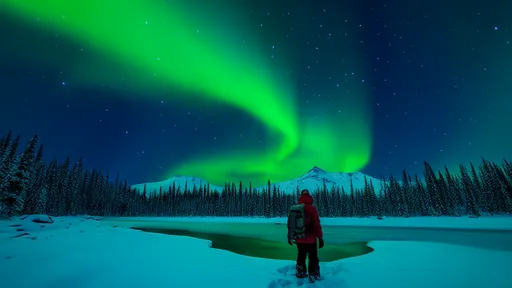
Our third evening introduced us to the first of our two primary observation methods: the dedicated Aurora viewing lodges. These are not simple sheds; they are sanctuaries of warmth strategically placed far from the city's light pollution. The one we visited, nestled on a ridge overlooking a frozen valley, was a rustic but comfortable cabin with large, panoramic windows. Inside, the atmosphere was one of hushed anticipation. The warmth from the wood stove was a welcome reprieve as we set up our tripods. The key advantage here was comfort. We could monitor the sky from inside, sipping hot cocoa, only venturing into the -20°F air when the green glow began to intensify. That night, we were rewarded. Around 11 PM, a faint, milky smear appeared on the northern horizon. It looked almost like a wisp of cloud, but it began to pulse and shift. Then, it exploded. Luminous green ribbons, tinged with hints of violet, snaked across the star-dusted blackness, twisting and swirling in a silent, cosmic ballet. The only sound was the frantic clicking of camera shutters and the occasional gasp of awe. This was the Aurora in its full, majestic glory, observed from the relative comfort of a shelter.
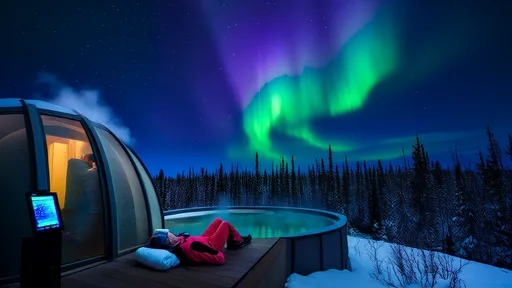
However, the following night promised a different, more immersive experience. We were headed to Chena Hot Springs Resort, a legendary location for Aurora chasers. The journey there felt like traveling to another planet. After a long drive through a tunnel of snow-covered trees, we arrived at a remote valley where geothermal activity keeps the resort running. The contrast was breathtaking. We walked from the frozen parking lot, our breath pluming in the air, toward a grotto of naturally heated rock pools surrounded by snow and ice. Slipping into the 106°F water while the air temperature hovered around -25°F is a sensation I will never forget. An initial shock gives way to a profound, enveloping warmth. And then, you look up.
Steam rises from the water, occasionally obscuring the view, but when it clears, the universe unveils itself. With no light pollution and the unique microclimate, the clarity of the night sky is staggering. The Milky Way is a thick, brilliant river of stars arching directly overhead. This is where the Hot Springs Astro-Photography comes into its own. The challenge is immense—protecting your camera gear from the steam while managing long exposures from a unique vantage point. But the reward is a photograph unlike any other. To capture the ethereal lights of the Aurora dancing above the serene, steam-shrouded figures of fellow observers in a natural hot spring is to capture a moment of pure magic. It feels primal, a connection to the elements that is impossible to replicate in a viewing cabin. On this night, the Aurora was more subtle, a slow-moving curtain of soft green, but the experience of watching it from the soothing embrace of the springs was, in many ways, more profound.
Each observation method offered a distinct perspective. The viewing lodges provided stability, comfort, and the ability to use more sophisticated equipment without fear of condensation or freezing. They are the choice for the serious photographer who needs control. The hot springs, conversely, are for the soul. They offer a visceral, almost spiritual connection to the phenomenon. The warmth of the earth beneath you juxtaposed with the cold air on your face and the celestial fire in the sky creates a powerful synergy. Over the seven days, we alternated between these locations, learning to read the Aurora forecast, the KP index, and the cloud cover like seasoned sailors reading the sea.
By the final night, our group had transformed from a collection of anxious tourists into a band of seasoned Aurora hunters. We had shared stories, hot drinks, and the silent, communal wonder of watching the sky ignite. Our last chase took us back to a remote viewing lodge. The forecast was promising, but the clouds were stubborn. We waited for hours, the hope in the room slowly dimming. Just as we were about to pack up, a break in the clouds appeared. What followed was the grand finale. The Aurora didn't just appear; it erupted. It filled the entire dome of the sky, from horizon to horizon, with furious, rapid-moving rays of green and magenta. It was so bright it cast faint shadows on the snow. There were no more gasps, just a stunned silence, a collective absorption of a beauty so overwhelming it felt sacred.
Flying out of Fairbanks, I looked down at the sleeping white landscape. The seven-day journey had been more than a vacation; it was a lesson in humility and wonder. We had sought the Northern Lights through the dual lenses of modern comfort and ancient ritual—the insulated observatory and the geothermal spring. Both paths led to the same magnificent destination. The memory is not just of the vibrant colors painted across the night, but of the steam rising into the Arctic air, the warmth of the wood stove, and the shared silence of a group of strangers united by one of nature's most spectacular shows. The Aurora is indeed a wild animal, but for one week, it chose to dance for us.
By /Sep 28, 2025
By /Sep 28, 2025

By /Sep 28, 2025
By /Sep 28, 2025

By /Sep 28, 2025
By /Sep 28, 2025
By /Sep 28, 2025
By /Sep 28, 2025
By /Sep 28, 2025
By /Sep 28, 2025
By /Sep 28, 2025
By /Sep 28, 2025
By /Sep 28, 2025

By /Sep 28, 2025

By /Sep 28, 2025

By /Sep 28, 2025
By /Sep 28, 2025
By /Sep 28, 2025
By /Sep 28, 2025
By /Sep 28, 2025
