There exists a sacred geography for photographers across the Americas, a sprawling canvas stretching from the ancient stone citadels of the Andes to the silent, frozen forests of the Arctic North. It is a journey defined not just by latitude, but by light—the specific, almost magical quality of illumination that transforms a landscape into an icon. This pilgrimage for the lens leads to two places that stand as polar opposites in environment and atmosphere, yet are united by their power to captivate and challenge the visual storyteller: the sunrise over Machu Picchu in Peru and the aurora borealis dancing above Fairbanks, Alaska.
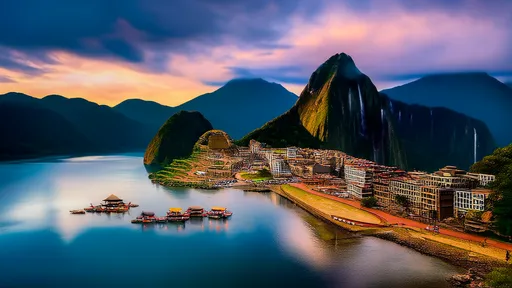
The journey to witness daybreak at Machu Picchu begins long before the first hint of light touches the sky. It starts in the darkness of the Sacred Valley, with a palpable sense of anticipation that hums through the small town of Aguas Calientes. The predawn ascent, whether by foot up steep, ancient trails or by winding bus ride, is a ritual in itself. The air is thin and cool, filled with the scent of damp earth and eucalyptus. As you climb, the world below is a tapestry of black velvet, punctuated only by the distant lights of the town. The destination is the citadel's entrance, a gateway to a world suspended between earth and sky.
Arriving at the vantage point, often at the Guardhouse or along the terraces facing Huayna Picchu, the scene is one of profound stillness. The famous ruins are mere silhouettes against a sky beginning its slow transition from indigo to a soft, ethereal blue. This is the moment of waiting, of checking camera settings with cold, fumbling fingers, of hoping the famous Andean mist—the *neblina*—will cooperate. For it is this very mist that often makes or breaks the shot. It can obscure the entire view, a photographer's nightmare, or it can cling to the mountain peaks like wisps of cotton, creating layers of depth and mystery that a clear sky could never offer.
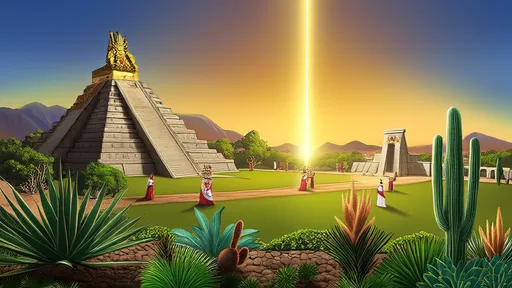
Then, it happens. The first sliver of sun breaches the horizon, and it is not a sudden explosion of light, but a gradual painting of the scene. The light at this altitude is uniquely sharp and pure, a consequence of the thin atmosphere. It does not simply illuminate; it sculpts. It catches the edges of the stonework, highlighting the incredible precision of the Inca stonemasons. The green of the terraces begins to emerge, vibrant against the grey stone. The sun's rays, often filtered through clouds or mist, create god beams—dramatic shafts of light that seem to spotlight the Lost City of the Incas. The challenge here is not just technical—managing exposure between the bright sky and the shadowed ruins—but emotional. It is about capturing the sheer awe of a civilization's masterpiece being unveiled by the sun, a daily miracle that has played out for centuries. The photograph becomes a record of a moment where history and nature collide in a symphony of light.
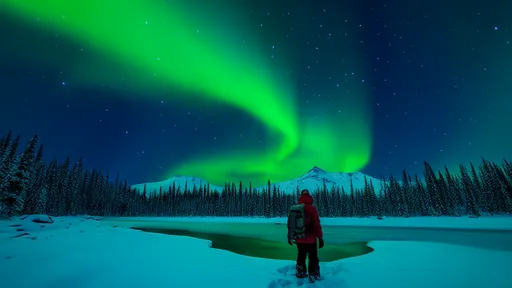
From the high-altitude dawn of Peru, the photographic quest shifts dramatically north, to the land of the midnight sun and its winter counterpart, the polar night. Fairbanks, Alaska, lies squarely within the Aurora Oval, making it one of the best places on Earth to witness the Northern Lights. Here, the pursuit is not of sunrise, but of darkness—deep, profound, and uninterrupted darkness. The chase begins not at dawn, but after dusk, often lasting deep into the frigid night. The preparation is entirely different: layers of thermal clothing, chemical hand warmers, and cameras specially protected from the biting cold that can drain batteries in minutes.
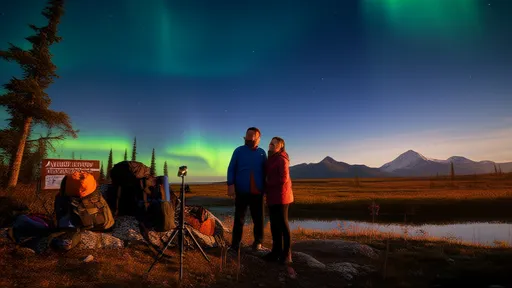
Unlike the static, predictable sunrise at Machu Picchu, the aurora is a fickle muse. It is a celestial performance dictated by solar winds and geomagnetic activity, its schedule unknowable. Photographers spend nights driving out of the city, away from light pollution, to frozen lakes, open fields, or remote cabins. They set up tripods on snow-packed ground, their breath pluming in the air, and they wait. The sky is a vast, black dome glittering with an impossible number of stars. The silence is absolute, broken only by the crunch of snow underfoot or the distant howl of a wolf. This waiting is an act of faith.
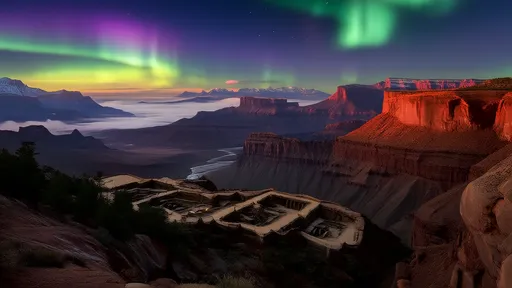
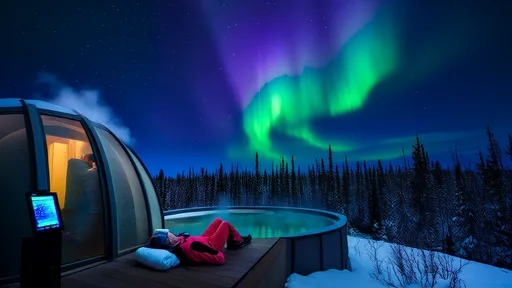
When the aurora appears, it often starts subtly—a faint, greenish smear on the horizon that could be mistaken for a distant cloud or the glow of a city. But then it intensifies. It can materialize as slow-moving, graceful ribbons or explode into a frantic, dancing curtain of light that fills the entire sky. The colors shift from pale green to vibrant emerald, sometimes tinged with pink or violet at the edges. The movement is hypnotic, a silent, cosmic ballet. Capturing this requires a mastery of long exposures, wide apertures, and high ISOs. The photographer must compose a shot that not only records the lights but also provides a sense of scale and place—a silhouetted spruce tree, a frozen river, a wooden cabin. The resulting image is not just a picture; it is a testament to patience and a glimpse into the immense, dynamic forces that govern our planet. It feels less like capturing a landscape and more like documenting a living, breathing entity.
While both destinations offer unparalleled photographic opportunities, they demand opposite approaches. Machu Picchu is about precision and planning—knowing the exact time of sunrise, securing permits, and positioning oneself perfectly for a brief, predictable window of time. The subject is solid, ancient, and unchanging; the light is the variable. Fairbanks, however, is an exercise in adaptability and resilience. The subject is the ephemeral light itself, and the photographer is at the mercy of solar weather. Success is measured in hours spent in sub-zero temperatures and the luck of being in the right place during a geomagnetic storm. One is a hunt for clarity and form; the other, a surrender to chaos and color.
Ultimately, these two poles of the American photographic experience represent the full spectrum of what it means to chase light. At Machu Picchu, the photographer stands amongst the ghosts of an empire, using the sun to reveal the enduring works of humanity. In Fairbanks, one stands alone under an infinite sky, humbled by the sheer power of nature's most dazzling light show. One connects us to our past, the other to our place in the cosmos. To have experienced both is to understand that the greatest images are born not just from technical skill, but from a willingness to journey to the ends of the earth, to wait in silence, and to be present when the world offers up its most breathtaking moments.
By /Sep 28, 2025
By /Sep 28, 2025

By /Sep 28, 2025
By /Sep 28, 2025
By /Sep 28, 2025
By /Sep 28, 2025
By /Sep 28, 2025

By /Sep 28, 2025
By /Sep 28, 2025
By /Sep 28, 2025
By /Sep 28, 2025
By /Sep 28, 2025
By /Sep 28, 2025
By /Sep 28, 2025

By /Sep 28, 2025

By /Sep 28, 2025
By /Sep 28, 2025
By /Sep 28, 2025
By /Sep 28, 2025
By /Sep 28, 2025
