In the heart of Mexico City, two monumental buildings stand as twin pillars of a nation's artistic soul: the National Palace and the Palace of Fine Arts. Within their walls reside the epic murals of Diego Rivera, a visual symphony that narrates the complex, turbulent, and vibrant history of Mexico. To follow the path of this master is to embark on a journey through time, ideology, and sheer artistic ambition, moving from the seat of political power to the temple of high culture.
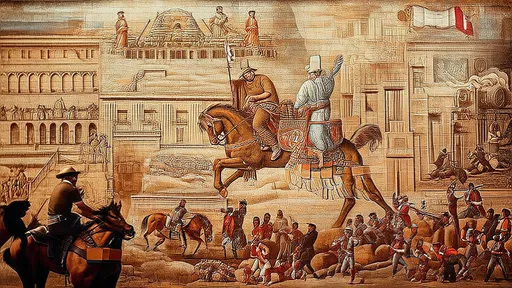
The journey appropriately begins at the National Palace, the center of Mexican governance since the Aztec era. Here, Rivera was commissioned to create a work that would define the modern Mexican state. The result is The History of Mexico, a sprawling fresco that covers the main stairwell and its surrounding walls. It is not merely a painting; it is a national epic rendered in pigment and plaster. Rivera, a committed Marxist, did not set out to create a neutral chronology. Instead, he constructed a powerful, critical, and often contentious narrative. The mural is a dense tapestry where pre-Hispanic splendor, the brutality of the Spanish conquest, the heroes of the Independence and the Revolution, and the struggles of the contemporary working class all coexist. The central staircase is dominated by the figure of Quetzalcoatl, the feathered serpent god, representing an idealized indigenous past. As one ascends, the viewer is confronted with scenes of exploitation and rebellion, culminating in a vision of a future shaped by socialist ideals. The mural is overwhelming in its scale and detail, a deliberate strategy by Rivera to immerse the viewer completely in his historical argument. It is art in the service of a public, didactic purpose, placed deliberately in a building symbolic of state authority, challenging every politician and citizen who passes through.
Rivera's work at the National Palace, while grand, was also a product of its time and its patron—the government. To understand the full scope of his vision, one must travel a short distance to the Palace of Fine Arts. This magnificent Art Nouveau and Art Deco building, intended as Mexico's premier cultural venue, houses what many consider Rivera's ultimate masterpiece: Man at the Crossroads. The story of this mural is as dramatic as the imagery it contains. Originally commissioned for the Rockefeller Center in New York City in 1933, the work was destroyed by the Rockefeller family before its completion because Rivera refused to remove a portrait of Vladimir Lenin. This act of censorship became a cause célèbre, cementing Rivera's reputation as an artist who would not compromise his political convictions. Years later, he recreated the mural, on an even larger scale, in the Palace of Fine Arts.
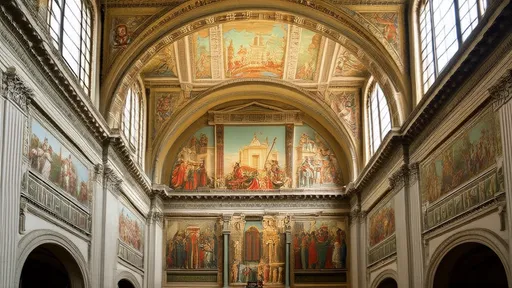
Walking into the hall where the mural resides is a breathtaking experience. Man at the Crossroads is a staggering composition, a cosmic vision of humanity's dilemma between progress and destruction. The central figure is a worker, positioned at the controls of a complex machine, surrounded by telescopic and microscopic visions of the universe—distant galaxies and the structure of cells. To one side, Rivera depicts a world of capitalist decay: unemployment, war, and frivolous socialites. To the other, he presents his utopian ideal: organized laborers, scientists, and athletes building a harmonious society. The technological optimism of the era is palpable, yet it is tempered by a stark warning about the paths available to mankind. Compared to the National Palace mural, which is firmly rooted in Mexican soil, Man at the Crossroads is universal in its scope. It is Rivera's grand philosophical statement, a synthesis of his belief in science, technology, and socialism as the forces that could lead humanity to a brighter future.
The stylistic evolution between the two sites is also remarkable. The National Palace murals possess a certain graphic quality, with strong outlines and a color palette that often echoes the earthy tones of Mexican landscapes. The figures are monumental, almost sculptural, their forms simplified for maximum impact from a distance. In the Palace of Fine Arts, Rivera's technique has become more fluid and intricate. The blending of colors is more sophisticated, and the depiction of futuristic machinery and cosmic phenomena demonstrates a mastery of complex perspective and detail. This progression shows an artist not resting on his laurels but continually pushing the boundaries of the fresco technique to accommodate an ever-expanding vision.
Following the trail of Diego Rivera from the National Palace to the Palace of Fine Arts is more than an art historical tour; it is a lesson in the power of public art. These murals were not created for quiet contemplation in a white-walled gallery. They were designed to provoke, educate, and inspire a populace. They engage in a direct dialogue with architecture and with the public space they inhabit. At the National Palace, the art speaks to power, reminding the government of its revolutionary origins and its obligations to the people. At the Palace of Fine Arts, it speaks to culture, presenting a manifesto on the role of art and science in human development. Together, they represent the two halves of Rivera's project: a deep, critical engagement with the past and a hopeful, if cautionary, look toward the future.
Today, as visitors stand before these colossal works, they participate in a legacy that Rivera intended. The murals continue to ask difficult questions about history, class, and progress. They remain as relevant and as powerful as when they were first painted, a testament to the enduring vision of the artist who believed that art should belong to everyone. To witness them is to understand that for Diego Rivera, the mural was not just a medium; it was a mission.
By /Sep 28, 2025
By /Sep 28, 2025

By /Sep 28, 2025
By /Sep 28, 2025

By /Sep 28, 2025

By /Sep 28, 2025

By /Sep 28, 2025

By /Sep 28, 2025
By /Sep 28, 2025

By /Sep 28, 2025

By /Sep 28, 2025

By /Sep 28, 2025

By /Sep 28, 2025
By /Sep 28, 2025

By /Sep 28, 2025

By /Sep 28, 2025

By /Sep 28, 2025

By /Sep 28, 2025

By /Sep 28, 2025

By /Sep 28, 2025
