Navigating the vast and varied landscapes of the Americas requires a strategic approach to transportation. The sheer scale of the continent, from the northern reaches of Canada to the southern tip of Argentina, presents a unique challenge for travelers seeking to explore its inland wonders. Unlike compact Europe or high-speed Asia, the Americas demand a blend of patience, planning, and a willingness to combine different modes of transport. The quest for the most cost-effective journey is not about finding a single magic bullet but about crafting a smart, multi-modal itinerary that balances time, budget, and experience. The most economical choice is rarely the fastest or most direct; it is the one that intelligently weaves together the continent's diverse transit options.
The undisputed champion for covering the immense distances between major regions is air travel. For journeys like moving from the United States to Brazil or hopping from Mexico to Chile, flying is not just convenient—it is fundamentally the only practical option. The key to affordability lies not in avoiding flights altogether, but in using them strategically. Budget airlines have expanded significantly, particularly in North America and increasingly in South America, offering competitive fares that can make long-haul bus or train trips seem less appealing by comparison. The real savings emerge when you use planes as your macro-level connectors. Instead of a single expensive point-to-point flight, consider building an itinerary around hub cities served by low-cost carriers. For instance, flying into a major hub like Bogotá, Lima, or Panama City can often yield cheaper fares from North America, from which you can then fan out to your final destination using more economical land or sea transport.
Once you have used a flight to position yourself within a specific country or region, the train emerges as a compelling option, though its viability varies dramatically. In the United States and Canada, long-distance train travel, operated by Amtrak and VIA Rail respectively, is an experience in itself. It is less about speed and efficiency and more about the journey—offering breathtaking views of mountains, prairies, and coastlines that are invisible from the interstate. From a cost perspective, trains in North America are often more expensive than buses and rarely cheaper than advance-purchase flight deals. However, for the budget-conscious traveler with time to spare, rail passes can offer significant value, allowing for flexible travel over a set period. The calculus shifts in parts of South America, like Peru or Ecuador, where scenic rail routes are primarily tourist-oriented and priced accordingly. Here, trains are a splurge for a specific leg of the journey, not a primary mode of budget transport.
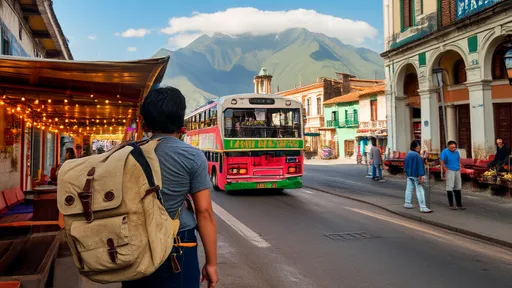
For genuine budget flexibility and unparalleled access to the heart of the continents, the bus network is unparalleled. This is where the most significant savings are often found, especially in Central and South America. Long-distance buses are the backbone of inland travel for millions of people, and the infrastructure reflects this. The quality range is vast, from basic, bumpy local services to luxurious executive-class coaches with fully reclining seats, meal service, and onboard entertainment. The cost difference between these tiers is usually minimal compared to Western standards, making the upgrade to a more comfortable ride a very cost-effective choice for overnight journeys. Buses connect cities, towns, and villages that are inaccessible by rail or air, making them indispensable for reaching off-the-beaten-path destinations. The most cost-effective combination often involves a flight between countries or continents, followed by an extensive and comfortable bus journey within the region.
No discussion of cost-effective travel in the Americas is complete without the ultimate symbol of freedom: the road trip. Renting a car or, for very long-term travel, even purchasing a vehicle, can unlock a level of spontaneity and access that public transport cannot match. The financial equation for自驾 is complex. While fuel costs can be high, especially in remote areas, the ability to split these costs among several travelers often makes it competitive with bus fares. The real value, however, comes from the freedom to stop wherever you wish, explore national parks at your own pace, and visit small towns devoid of bus stations. This mode works best when combined with others. A classic strategy is to fly into a major city, rent a car for a circular tour of a specific region—like the American Southwest, Patagonia, or the Yucatán Peninsula—and then return the car before taking a bus or flight to your next major destination. This avoids the high cost and hassle of a one-way rental drop fee while maximizing the utility of the vehicle.
Often overlooked in continental travel plans are the possibilities offered by ferries and boats. While not a primary mode for crossing the landmass, they provide critical and sometimes surprisingly economical links in specific corridors. The most famous example is the journey through southern Chile's Patagonian fjords. Sailing from Puerto Montt to Puerto Natales on a multi-day ferry is not only a spectacular adventure but can also be a cost-effective alternative to a long, arduous overland route through Argentina, saving both time and money when factored into a larger itinerary. In Central America, traveling by boat along the Caribbean coast or between islands can be both a necessity and a pleasure, often cheaper than domestic flights for moving cargo and people. Even the ferry from Buenos Aires to Colonia in Uruguay offers a budget-friendly and scenic alternative to flying. Integrating a ferry leg can break up a long journey beautifully while being kind to your wallet.
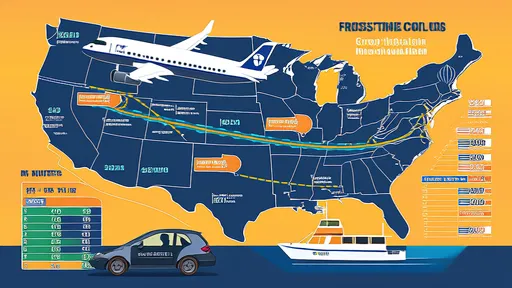
The art of crafting the most cost-effective itinerary therefore, lies in a thoughtful synthesis of these modes. It is about recognizing the strengths and weaknesses of each and deploying them where they make the most sense. A hypothetical optimal journey from New York to Machu Picchu might look like this: a budget flight from New York to Lima, a comfortable overnight bus from Lima to Cusco (saving on a night's accommodation), and then a combination of a shared taxi and a short train ride for the final scenic ascent to Aguas Calientes. Conversely, a trip from Toronto to Vancouver might be best served by a flight to Calgary, a rental car for a week exploring the Canadian Rockies, dropping the car back in Calgary, and then taking a scenic train journey through the rest of the mountains to the coast. There is no single formula, but the principle remains: use planes for the big leaps, buses for regional depth, trains for iconic experiences, cars for ultimate freedom, and boats for unique connections. By thinking of your journey as a multi-stage puzzle, you can discover a deeply rewarding and remarkably affordable way to experience the grand tapestry of the Americas.

By /Sep 28, 2025

By /Sep 28, 2025

By /Sep 28, 2025

By /Sep 28, 2025

By /Sep 28, 2025

By /Sep 28, 2025

By /Sep 28, 2025

By /Sep 28, 2025

By /Sep 28, 2025

By /Sep 28, 2025

By /Sep 28, 2025
By /Sep 28, 2025

By /Sep 28, 2025

By /Sep 28, 2025
By /Sep 28, 2025

By /Sep 28, 2025

By /Sep 28, 2025

By /Sep 28, 2025

By /Sep 28, 2025

By /Sep 28, 2025
