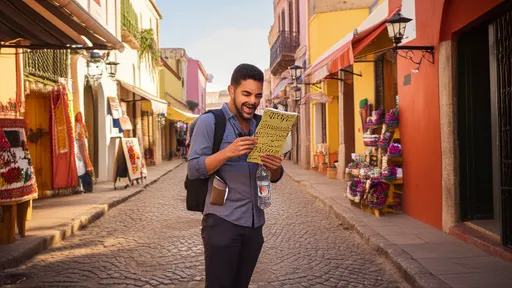
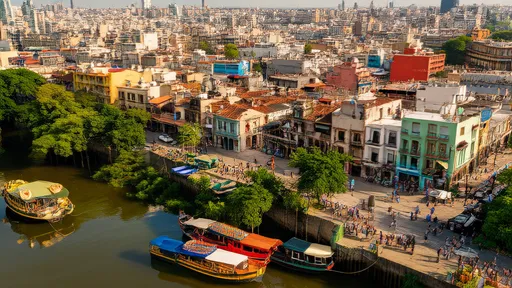
In the cobblestone streets of San Miguel de Allende, a young French couple scrolls through their smartphones, not for social media updates, but to access a real-time, augmented reality overlay of the historic parish church. The overlay, provided by the local tourism board's app, identifies architectural details, shares stories of its construction, and even points them to a nearby family-owned restaurant famous for its mole poblano. This scene is increasingly common across Mexico, a country once synonymous with all-inclusive resorts but now emerging as a pioneer in empowering the independent, digitally-savvy traveler.
For years, the archetypal Mexican vacation involved a flight to Cancún, a transfer to a gated resort complex, and days spent oscillating between the pool and the buffet. The world outside the resort gates was often perceived as a frontier for the exceptionally brave or the Spanish-speaking. However, a quiet revolution has been underway. Driven by a strategic national vision and significant investment, Mexico is systematically dismantling the barriers to free and independent travel. The goal is not to replace the traditional tour operator but to create a seamless, intuitive, and deeply enriching ecosystem where travelers feel confident to craft their own unique journeys. This transformation is turning Mexico into a global laboratory for what is now termed smart tourism.
The cornerstone of this transformation is connectivity. A robust digital infrastructure is the invisible highway upon which all smart tourism services travel. Recognizing this, the Mexican government and private sector have embarked on an ambitious project to blanket the country in high-speed internet. Public Wi-Fi zones, often free to access, have proliferated in town squares (zócalos), major archaeological sites like Chichén Itzá and Teotihuacán, and along popular tourist corridors. Major telecommunication companies have aggressively expanded 4G and, increasingly, 5G coverage, ensuring that even in relatively remote areas like the Copper Canyon or the beaches of Zipolite, travelers can remain connected. This foundational work means that the digital tools essential for modern travel—maps, translation apps, booking platforms—function reliably, giving travelers the confidence to venture beyond their hotel lobbies.
At the heart of the experience for the modern traveler is the smartphone, and Mexico has responded with a suite of sophisticated, user-centric applications. The official Visit Mexico app is a prime example. Far from a simple digital brochure, it acts as a comprehensive travel companion. Its interactive maps are downloadable for offline use, a critical feature for exploring areas with spotty service. But its true power lies in its layers of integrated data. A user can select an interest—say, Mayan history or contemporary art—and the app will generate a personalized itinerary, complete with walking routes, estimated times, and nearby dining options that match the user's budget preferences. It integrates real-time public transportation schedules in cities like Mexico City and Guadalajara and offers audio guides for major museums, providing context that was once only available through a hired guide.
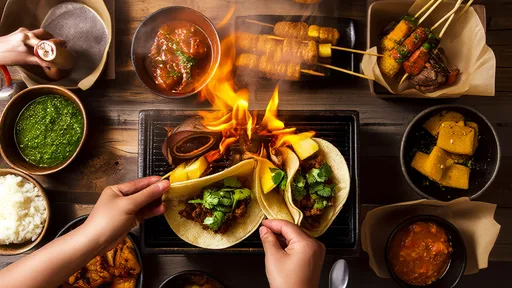
Beyond the national platform, local and regional innovation is flourishing. The state of Yucatán’s tourism app, for instance, uses beacon technology. As travelers approach a significant cenote (a natural pit or sinkhole) or a lesser-known hacienda, their phone receives a push notification with a brief history, safety tips for swimming, or a link to book a tour. In Oaxaca, an app developed by local entrepreneurs focuses exclusively on the region's famed culinary scene, mapping out routes for food markets, mezcal tastings, and cooking classes with local chefs, often facilitating direct bookings that put money straight into the hands of small business owners. This decentralized approach ensures that the digital resources are hyper-relevant and deeply authentic.
Perhaps the most significant impact of this digital shift is the empowerment of local communities and small businesses. In the past, a family-run hotel in a Pueblo Mágico (Magic Town) like Tepoztlán or a guide offering bird-watching tours in the Lacandon Jungle had limited avenues to reach an international audience. They were often dependent on large tour operators who took a substantial commission. Today, platforms like Airbnb, Booking.com, and specialized Mexican sites have democratized access. A traveler can now book a room in a colonial-era house in Guanajuato or a palapa-roofed cabana on the Pacific coast with a few taps. Similarly, platforms like Tripadvisor and Viator allow small-scale tour operators to showcase their unique offerings—from taco-making classes in Mexico City to weaving workshops in Chiapas—directly to a global market. This direct economic connection fosters a more sustainable and equitable tourism model, where spending has a greater chance of benefiting the local economy directly.
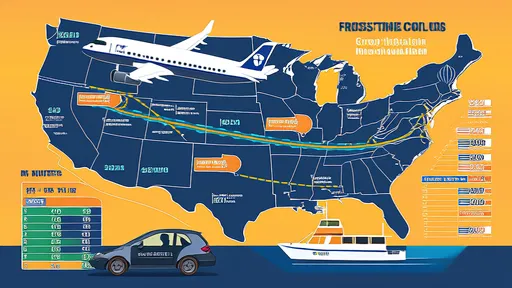
The commitment to a smarter travel experience extends to the physical journey itself. Mexico’s major airports, including the new Felipe Ángeles International Airport (AIFA) and the renovated Mexico City International Airport (AICM), are equipped with smart signage, free high-speed Wi-Fi, and interactive kiosks that provide flight information, transportation options, and city guides in multiple languages. For those renting a car, GPS navigation systems now come pre-loaded with points of interest that go beyond the typical tourist traps, highlighting scenic lookouts, local markets, and historical markers. In cities, apps like Uber and DiDi (a Chinese ride-sharing giant with a strong presence in Mexico) offer reliable and cashless transportation, while digital ticketing for metro and bus systems in urban centers reduces friction and confusion for visitors.
Looking ahead, the trajectory of Mexico's smart tourism initiative points towards even greater personalization and immersion. Pilot programs are testing the use of Artificial Intelligence to act as a virtual concierge. Imagine an AI that learns your preference for quiet, off-the-beaten-path museums over crowded ones and proactively suggests an itinerary for a day in Puebla that aligns perfectly with your tastes. Augmented and Virtual Reality are also on the horizon. While currently used for historical overlays at archaeological sites, the potential is vast. Travelers could soon take a VR tour of a hotel room before booking, or use AR to visualize how a pre-Columbian temple looked in its prime, superimposed onto the current ruins.
The narrative of travel in Mexico is being rewritten. The country is no longer just a destination for sun-seeking package tourists; it is actively courting the curious, the independent, and the adventurous. By building a sophisticated digital backbone and fostering a culture of innovation, Mexico has made the once-daunting prospect of a self-planned journey not just feasible, but profoundly rewarding. The message to the world's travelers is clear: you are invited to explore Mexico on your own terms, equipped with the tools to discover its authentic soul, one personalized adventure at a time.
By /Sep 28, 2025

By /Sep 28, 2025

By /Sep 28, 2025

By /Sep 28, 2025
By /Sep 28, 2025

By /Sep 28, 2025

By /Sep 28, 2025

By /Sep 28, 2025

By /Sep 28, 2025

By /Sep 28, 2025

By /Sep 28, 2025
By /Sep 28, 2025
By /Sep 28, 2025
By /Sep 28, 2025
By /Sep 28, 2025
By /Sep 28, 2025

By /Sep 28, 2025

By /Sep 28, 2025

By /Sep 28, 2025

By /Sep 28, 2025
