In a bold move that reshapes transpacific aviation, China's Hainan Airlines and China Southern Airlines have launched direct flights to Mexico, cutting travel time to just 11 hours and opening a new corridor between Asia and the Americas. This strategic expansion marks a significant milestone in aviation history, creating a direct aerial bridge to a land long shrouded in mystery for many Chinese travelers.
The inaugural flight, a Hainan Airlines Boeing 787 Dreamliner, departed from Shenzhen Bao'an International Airport and touched down at Mexico City's Benito Juárez International Airport, greeted by water cannon salutes and ceremonial fanfare. The event was more than just a new route inauguration; it symbolized the deepening economic and cultural ties between the two Pacific nations. For decades, travelers between China and Mexico faced arduous journeys with layovers in North American cities, often adding six to eight hours to their travel time. Now, the direct connection promises to transform business and tourism flows between these distant yet increasingly connected civilizations.
Mexico's Tourism Minister, Miguel Torruco Marqués, hailed the new flights as a "game-changer" for bilateral relations. "This is not merely about convenience; it's about building bridges of understanding," Marqués stated at a welcoming ceremony. "For the first time, we have a direct link that allows our cultures to meet halfway, quite literally. We anticipate a significant surge in visitors from China eager to explore our ancient pyramids, vibrant cities, and rich culinary traditions." The Mexican government has been actively working to streamline visa processes and enhance tourist services in anticipation of increased Chinese arrivals, including training Mandarin-speaking guides and incorporating Chinese payment systems at major tourist destinations.
On the Chinese side, the sentiment is equally optimistic. Aviation analysts point to the growing economic footprint of Chinese companies in Latin America as a key driver behind this aviation breakthrough. "Where trade and investment flow, air connections must follow," explained Dr. Wei Zhang, an aviation economist at Beijing University. "Chinese corporations are heavily invested in Mexican manufacturing, infrastructure, and technology sectors. These direct flights will facilitate executive travel, strengthen supply chain logistics, and foster closer business partnerships. The 11-hour flight time is a competitive advantage that cannot be overstated in the world of international business."
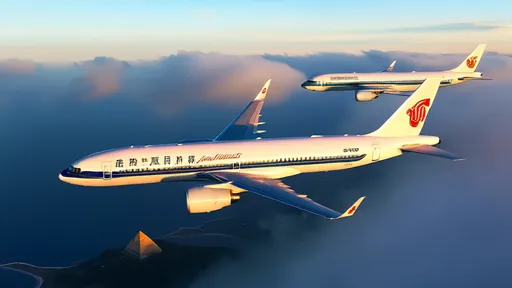
The aircraft chosen for these marathon routes are testaments to modern aviation engineering. Both airlines are utilizing their flagship long-haul aircraft—the Airbus A350-900 and Boeing 787-9 Dreamliner. These twin-aisle jets are specifically designed for efficiency and passenger comfort on extended journeys. They feature advanced air filtration systems that renew cabin air every two to three minutes, higher cabin humidity to reduce travel fatigue, and larger dimmable windows that help mitigate jet lag. The cabins are configured with luxurious business class suites offering full flat beds and premium economy sections with extra legroom, acknowledging the demanding nature of an 11-hour flight.
For the airlines themselves, the Mexico route represents a strategic diversification. With the trans-Pacific market between China and the United States facing increasing competition and regulatory scrutiny, expanding into new Latin American destinations offers a fresh growth frontier. China Southern, one of Asia's largest carriers, will operate its flights from Guangzhou, leveraging its massive southern China hub. Hainan Airlines, known for its award-winning service, will connect from Shenzhen, a global technology hub. This geographical spread ensures they capture different passenger demographics, from manufacturing executives in the Pearl River Delta to tech entrepreneurs in Shenzhen.
The impact on tourism is expected to be profound. Mexico, with its stunning diversity from the beaches of Cancún to the archaeological wonders of Chichén Itzá and the urban energy of Mexico City, has long been a magnet for North American and European tourists. However, it remains a relatively undiscovered destination for the vast Chinese outbound travel market, which surpassed 150 million trips annually before the pandemic. Travel agencies in major Chinese cities are already curating specialized packages that highlight Mexico's unique selling points: its fusion of indigenous and Spanish colonial heritage, its status as a UNESCO World Heritage hotspot, and its renowned cuisine, which itself has been recognized as an intangible cultural heritage by UNESCO.
Beyond tourism and business, the new air link is poised to strengthen academic and cultural exchanges. Universities in both countries are exploring opportunities for student exchange programs and joint research initiatives, particularly in fields like archaeology, anthropology, and environmental science. "Imagine Chinese archaeology students working alongside their Mexican counterparts at Mayan ruins, or Mexican chefs learning the intricacies of Sichuan cuisine in Chengdu," mused Cultural Attaché Elena Morales from the Mexican Embassy in Beijing. "This direct flight removes a major logistical barrier. It makes these meaningful exchanges not just possible, but practical."
The environmental considerations of such long-haul operations have not been overlooked. Both Hainan Airlines and China Southern have incorporated sustainable aviation fuel (SAF) blends into their operational planning for the Mexico route, part of broader industry commitments to achieve net-zero carbon emissions. The modern fleets are significantly more fuel-efficient than previous generation aircraft, reducing the carbon footprint per passenger. Nevertheless, the environmental impact of adding new long-haul routes remains a topic of discussion among sustainability advocates, who urge continued investment in greener aviation technologies.
As the first planes landed and passengers disembarked into the thin, high-altitude air of Mexico City, there was a palpable sense of embarking on a new era. The 11-hour flight is more than a convenience; it is a catalyst. It compresses time and space, bringing two great nations closer together. It promises to unlock economic potential, foster mutual understanding, and allow travelers to experience the profound mysteries of a continent that, for many, was once a world away. The skies, as they say, are no longer the limit.

By /Sep 28, 2025

By /Sep 28, 2025
By /Sep 28, 2025

By /Sep 28, 2025

By /Sep 28, 2025

By /Sep 28, 2025

By /Sep 28, 2025

By /Sep 28, 2025

By /Sep 28, 2025

By /Sep 28, 2025

By /Sep 28, 2025

By /Sep 28, 2025

By /Sep 28, 2025

By /Sep 28, 2025
By /Sep 28, 2025

By /Sep 28, 2025

By /Sep 28, 2025

By /Sep 28, 2025

By /Sep 28, 2025

By /Sep 28, 2025
