For many travelers, an Alaskan cruise represents the ultimate wilderness adventure, a journey into the heart of a land where ice-age glaciers tumble into the sea and wildlife roams with a majestic indifference to human presence. The experience is transformative, but the sheer scale of Alaska and the variety of cruise itineraries can make planning a daunting task. The key to unlocking this frozen paradise lies not just in choosing a ship, but in selecting the right route—one that aligns with your deepest desires to witness calving glaciers and encounter its iconic fauna. This is not a simple vacation; it's a pilgrimage to the front lines of the wild.
The most critical decision you'll make is between the Inside Passage and the Gulf of Alaska itineraries. The classic Inside Passage route is a sheltered waterway that winds through a labyrinth of emerald-green islands, offering calm seas and stunning coastal scenery. This is the quintessential Alaskan cruise for first-timers, a journey rich in Tlingit and Haida culture, with ports like Ketchikan, Juneau, and Skagway. While you will see glaciers—most notably the mighty Hubbard Glacier or the accessible Mendenhall Glacier near Juneau—the primary focus here is on the temperate rainforest, historic gold rush towns, and the protected waters teeming with marine life. It's a more curated, accessible introduction to the 49th state.
In stark contrast, the Gulf of Alaska route, often termed the "Voyage of the Glaciers," is a one-way journey, typically between Seward or Whittier and Vancouver. This is the itinerary for the purist, the traveler whose soul yearns for raw, untamed landscapes. This route ventures further north, piercing the heart of Glacier Bay National Park and College Fjord, places where the ice is not just a sight but an overwhelming presence. Here, the ship becomes a silent spectator to a world of blue ice, where the thunderous crack of a calving glacier is a regular soundtrack. The wildlife viewing is often more dramatic as well, as you cruise closer to the feeding grounds of larger marine mammals.
To truly appreciate the glaciers, you must understand their language. It’s not enough to simply see them from a distance; you must seek out the experiences that bring you into their realm. The best way to do this is by choosing an itinerary that includes a full day of scenic cruising in a major glacial park. Glacier Bay is the crown jewel, a UNESCO World Heritage Site where park rangers board the ship to provide commentary. Spending eight to ten hours navigating this 65-mile-long bay allows you to witness the grand spectacle of multiple tidewater glaciers, like the massive Margerie Glacier, which actively calves stories-high icebergs into the frigid water.
Similarly, Hubbard Glacier, North America's largest tidewater glacier, is a staggering wall of blue ice stretching 76 miles long and 6 miles wide. Captains often maneuver the ship to within a half-mile of its face, a humbling experience that highlights the glacier's raw power. For a more intimate encounter, consider an itinerary that offers small-boat excursions. These smaller, more agile vessels can navigate closer to the glacier walls and through fields of brash ice, allowing you to hear the pops and cracks of the ice with an astonishing clarity that is lost on the larger cruise ships.
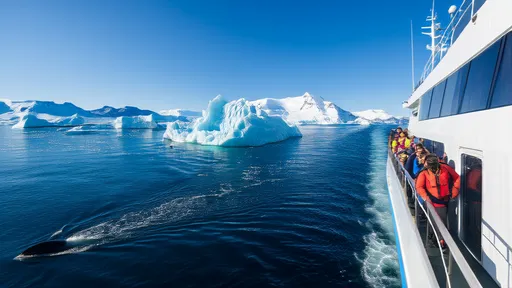
Wildlife in Alaska is not a guaranteed show; it is a privilege. To maximize your chances, timing and location are everything. The summer months, from May to September, are the prime viewing season, with each month offering a slightly different highlight. May and June are often considered the best for viewing bear activity along the shores, as they forage for food. The waters are particularly rich with humpback whales from June through August, when they gather in large numbers to feed on the abundant krill and small fish. July and August are also peak season for spotting orcas, especially in the Inside Passage around areas like Frederick Sound.
When it comes to seeing wildlife from the ship, patience is your greatest asset. The best strategy is to find a quiet spot on deck, preferably on the lower, more open decks for stability, and scan the horizon systematically. Bring a good pair of binoculars—this is non-negotiable. Look for the tell-tale signs: the puff of a whale's blow, a disturbance on the water's surface, or a congregation of birds, which often indicates a bait ball and feeding activity below. Early mornings and late evenings, when the light is soft and the water is calm, are often the most productive times for sightings.
However, the most profound wildlife encounters often happen on shore excursions. To see coastal brown bears in their natural habitat, an excursion from ports like Ketchikan or Sitka to a place like the Neets Bay or the Pack Creek Sanctuaries is unparalleled. Here, from a safe and guided distance, you can observe these magnificent creatures fishing for salmon. For bird enthusiasts, the South Marble Island in Glacier Bay is a cacophony of sound and sight, home to thousands of puffins, kittiwakes, and cormorants. A whale-watching tour from Juneau or Icy Strait Point, conducted on smaller boats, can bring you within respectful distance of breaching humpbacks and playful sea otters floating on their backs.
Beyond the primary routes, there are deeper, more immersive options for the intrepid explorer. Small-ship expedition cruises are a game-changer. These vessels, carrying anywhere from 50 to 200 passengers, can navigate narrower fjords and shallow inlets that are completely inaccessible to the large megaships. They prioritize adventure over luxury, often featuring onboard naturalists, kayak launch platforms, and flexible itineraries that can change based on whale sightings or weather conditions. On an expedition cruise, the destination is the wilderness itself; you might spend an afternoon zodiac cruising alongside a glacier or kayaking silently past a harbor seal hauled out on an ice floe.
Ultimately, the choice of an Alaskan cruise is a deeply personal one, a balance between comfort and adventure, between the curated and the spontaneous. If your dream is to be enveloped by the sheer scale of glacial ice, to feel the cold breath of the Arctic, then a Gulf of Alaska itinerary on a ship that prioritizes scenic cruising is your path. If your heart beats faster at the thought of a bear ambling along a distant shore or the fluke of a whale disappearing into the deep, then focus on an itinerary with prime wildlife ports and invest in those critical shore excursions. Alaska does not give up its secrets easily. It rewards the patient, the prepared, and the respectful. Choose your route wisely, and you will not just see Alaska; you will feel its wild, untamable pulse.

By /Sep 28, 2025
By /Sep 28, 2025

By /Sep 28, 2025

By /Sep 28, 2025

By /Sep 28, 2025
By /Sep 28, 2025

By /Sep 28, 2025

By /Sep 28, 2025

By /Sep 28, 2025
By /Sep 28, 2025

By /Sep 28, 2025

By /Sep 28, 2025

By /Sep 28, 2025
By /Sep 28, 2025

By /Sep 28, 2025

By /Sep 28, 2025
By /Sep 28, 2025
By /Sep 28, 2025
By /Sep 28, 2025
By /Sep 28, 2025
