The Hangzhou Triennial of Fiber Art has once again positioned itself at the forefront of contemporary art discourse with its latest edition, a sprawling exhibition that compellingly argues for fiber as a vital medium for addressing the most pressing issues of our time. This year's iteration is distinguished by a powerful international roster, headlined by the profound and meticulous work of American artist Ann Wilson, whose presence signals the Triennial's commitment to artistic practices that are both materially innovative and deeply resonant with historical and social consciousness.
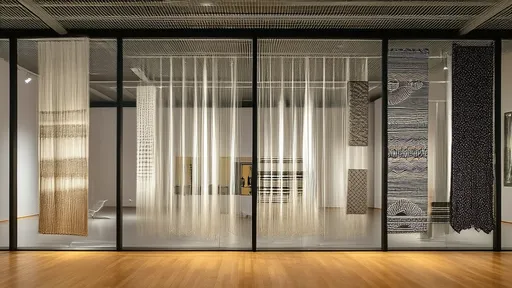
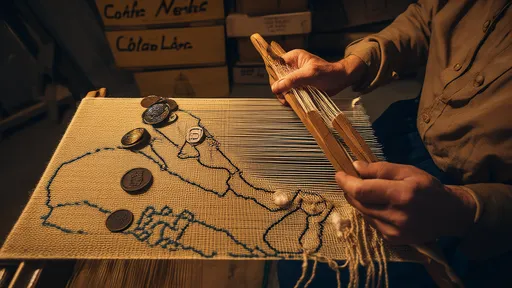
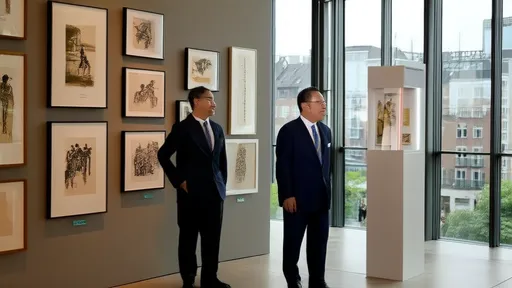
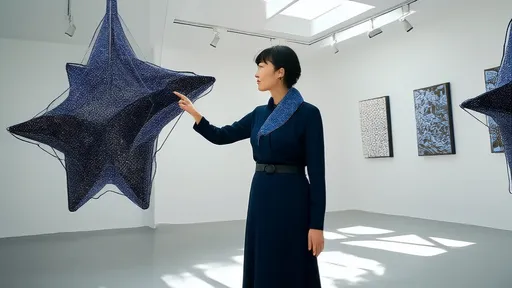
The inclusion of Ann Wilson is particularly significant. For decades, Wilson has been a quiet but formidable force in the art world, known for her labor-intensive processes that transform humble materials like lint, thread, and fabric into monumental installations and delicate works on paper. Her practice is an archaeology of the everyday; she unearths narratives embedded in domestic labor, the passage of time, and the very fibers that constitute our material world. To experience her work in the context of Hangzhou, a city with a rich and ancient history of silk production, creates a powerful dialogue between global artistic currents and local tradition. Her large-scale piece, "Epitaph", composed of intricate webs of black thread against vast white panels, evokes both cosmic maps and microscopic cellular structures, prompting viewers to contemplate scale, connection, and fragility.
Wilson's work does not exist in a vacuum. She is joined by a carefully curated selection of artists from across the globe, each bringing their unique cultural perspective to the language of fiber. From Japan, artist Chiharu Shiota presents a haunting installation using her signature red yarn, which ensnares everyday objects in a complex, visceral network that speaks to themes of memory, anxiety, and human connection. Meanwhile, South African artist Athi-Patra Ruga offers a vibrant and provocative critique of post-colonial identities through his elaborate tapestries and performances that utilize needlework and beading. The diversity of approaches is staggering, ranging from the politically charged weavings of Chilean artist Voluspa Jarpa to the formally inventive textile sculptures of Polish artist Magdalena Abakanowicz, whose pioneering work from the latter half of the 20th century provides a crucial historical anchor for the entire exhibition.
The curatorial vision for this Triennial is bold and clear: to demonstrate that fiber art is no longer a marginalized craft but a central and dynamic field of artistic inquiry. The works on display collectively challenge the traditional hierarchies that have long separated art from craft. They prove that techniques like weaving, knitting, and embroidery are not merely decorative but are capable of carrying immense conceptual weight. This is art that demands slow looking. The thousands of hours of handwork evident in a single piece by Wilson or Shiota stand in stark opposition to the instant gratification of digital culture, offering a meditative counterpoint and a testament to the value of sustained, physical labor.
Furthermore, the thematic concerns woven throughout the exhibition are unmistakably contemporary. Environmental sustainability is a recurring motif, with several artists utilizing recycled textiles or organic, biodegradable materials to comment on consumption and waste. Social justice and the politics of identity are also central, as many artists use fiber—a medium historically associated with women's work and domesticity—to reclaim and re-contextualize these narratives, giving voice to previously silenced histories. The very tactility of fiber art creates an immediate, almost primal connection with the viewer, engaging senses beyond the purely visual and making complex ideas feel immediate and tangible.
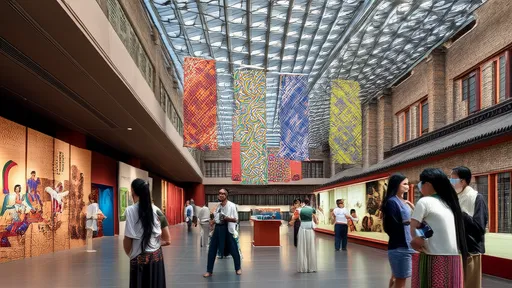
The setting of the Triennial itself plays a crucial role. Hosted across several prestigious venues in Hangzhou, including the Zhejiang Art Museum, the exhibition engages in a direct conversation with its environment. The city's legacy as a hub of silk production on the ancient Silk Road infuses the contemporary works with deeper layers of meaning. It prompts considerations of trade, cultural exchange, and the flow of ideas—themes that are remarkably relevant in today's globalized yet fractured world. Seeing Ann Wilson's delicate, lint-based compositions in a city renowned for the strength and luxury of its silk creates a fascinating tension between different material histories and values.
In conclusion, the Hangzhou Triennial of Fiber Art, with Ann Wilson as a cornerstone of its international lineup, is more than just an art exhibition; it is a significant cultural event. It successfully elevates fiber art to a new level of critical recognition, showcasing its unparalleled ability to weave together the personal and the political, the local and the global, the ancient and the avant-garde. The works are not simply to be seen but to be experienced, inviting visitors to reflect on the interconnectedness of our world—a world literally and metaphorically held together by threads. This Triennial firmly establishes that the most profound conversations in contemporary art are happening not just with paint and marble, but with thread, cloth, and the patient, persistent work of human hands.
By /Sep 26, 2025
By /Sep 26, 2025
By /Sep 25, 2025

By /Sep 25, 2025
By /Sep 26, 2025

By /Sep 26, 2025
By /Sep 25, 2025
By /Sep 26, 2025
By /Sep 26, 2025
By /Sep 25, 2025

By /Sep 25, 2025
By /Sep 25, 2025
By /Sep 26, 2025
By /Sep 26, 2025
By /Sep 25, 2025
By /Sep 26, 2025
By /Sep 25, 2025

By /Sep 25, 2025
By /Sep 26, 2025
By /Sep 25, 2025
