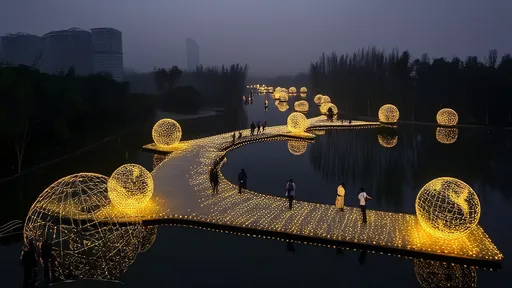
In an era where digital experiences often feel fleeting and two-dimensional, the art world is witnessing a radical shift towards total sensory immersion. The Giant Planet exhibition stands at the forefront of this movement, not merely as a collection of artworks to be viewed, but as a living, breathing ecosystem designed to be felt, smelled, and absorbed. This is not an exhibition you simply see; it is one you inhabit.
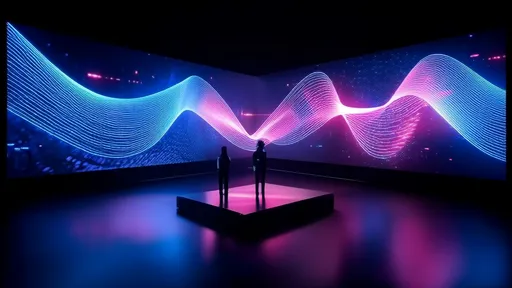
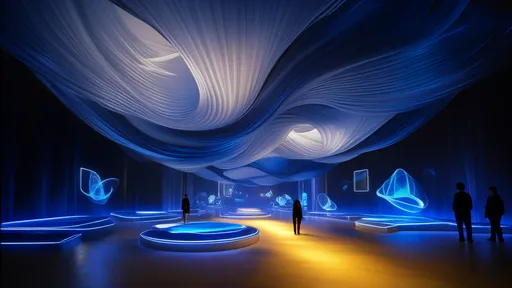
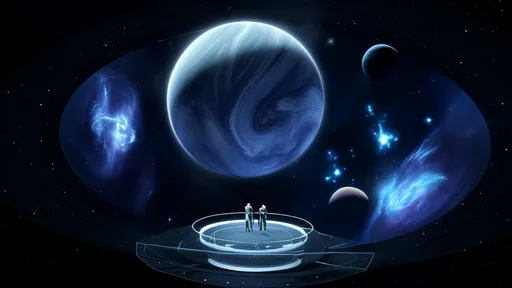
The moment you cross the threshold, the conventional white cube gallery space dissolves. You are enveloped by darkness, a void that serves as a canvas for the monumental projections to come. The scale is the first thing that strikes you. The term "Giant Planet" is not merely metaphorical; the visuals are rendered on an epic scale, stretching from floor to ceiling and wrapping around the periphery of the vast hall. You are not an observer looking at a screen; you are a tiny entity standing on the surface of a colossal, alien world. The immersive projection technology, a symphony of high-lumen laser projectors and complex mapping software, creates a seamless visual field with such high resolution that you can almost feel the texture of the virtual terrain beneath your feet.
This visual grandeur, however, is only half the story. The true genius of the exhibition lies in its integration of a sophisticated olfactory system, a network of scent diffusers synchronized with the visual narrative. As the projection shifts from a serene, azure landscape of crystalline forests to a tumultuous, volcanic plain, the air around you transforms. The crisp, clean scent of ozone and alien flora gives way to the pungent, sulphurous aroma of geothermal activity. This is not a background scent; it is a narrative device. The smells are precisely calibrated and released in specific zones, ensuring that your journey through the exhibition is a multi-layered experience. The scent of damp earth after a simulated rainfall feels so authentic it triggers a primal memory, while the subtle, sweet fragrance of bioluminescent blossoms that appear in a twilight sequence creates a poignant, almost melancholic atmosphere.
The creators of Giant Planet, a collective of artists, programmers, and scent designers, refer to their work as "sensory choreography." Their objective is to orchestrate a symphony of senses where sight and smell are not just parallel experiences but are deeply intertwined, each enhancing and giving meaning to the other. The goal is to induce a state of multi-sensory resonance—a phenomenon where the combined sensory input creates a cognitive and emotional impact far greater than the sum of its parts. It’s an attempt to bypass the analytical brain and speak directly to the limbic system, the seat of memory and emotion. When the visuals depict a slow, graceful descent into a deep oceanic trench, the accompanying scent is a cool, saline mist that carries the faint, metallic tang of deep water, evoking a profound sense of wonder and isolation.
This approach challenges the very hierarchy of the senses that has dominated Western art for centuries, which has overwhelmingly privileged the visual. Giant Planet argues that for an experience to be truly immersive, it must engage the body as a whole. The rumbling bass of the soundscape is felt in your chest; the cool air of a mountain pass raises goosebumps on your skin; the scent of an alien jungle is so rich you can almost taste it. This holistic engagement fosters a powerful sense of presence—the convincing illusion of being in another place. Visitors often report losing track of time and their physical surroundings, fully absorbed in the reality of the Giant Planet.
Beyond its technical achievements, the exhibition prompts deeper philosophical questions about our relationship with nature and technology. The world depicted is both breathtakingly beautiful and eerily unfamiliar. It is a pristine environment, untouched by human hands, yet it is a complete fabrication, born from code and chemical compounds. This creates a fascinating paradox: using the most advanced technology to simulate a primal, natural experience. It asks us whether the feelings of awe and connection we experience in the face of natural wonders are dependent on the authenticity of the source, or if they can be authentically evoked through artificial means. In an age of climate change and virtual realities, Giant Planet becomes a poignant commentary on the landscapes we are losing and the ones we are creating.
The impact on visitors is palpable and profound. People move through the space slowly, quietly, their faces illuminated by the shifting colours of the alien sky. Conversations are hushed, not out of reverence for a traditional gallery setting, but because the experience feels personal, almost sacred. The combination of immersive visuals and evocative scents triggers strong, often unexpected, emotional responses and vivid memories. It demonstrates the powerful, and often underestimated, link between olfaction and memory. The exhibition becomes a unique, personal journey for each individual, a Rorschach test where the swirling visuals and complex scents are interpreted through the lens of their own subconscious.
Giant Planet is more than an exhibition; it is a landmark event in the evolution of experiential art. It successfully moves beyond the spectacle of immersive technology to harness it for a deeper, more resonant purpose. By masterfully weaving together sight and smell, it creates a new language of sensation, proving that the future of art may not lie in what we see, but in what we feel. It is a bold, beautiful, and deeply affecting journey to another world, and its echoes linger long after you have returned to our own.
By /Sep 26, 2025
By /Sep 26, 2025
By /Sep 25, 2025
By /Sep 25, 2025

By /Sep 26, 2025
By /Sep 26, 2025
By /Sep 25, 2025
By /Sep 26, 2025
By /Sep 26, 2025
By /Sep 25, 2025
By /Sep 25, 2025
By /Sep 25, 2025
By /Sep 26, 2025
By /Sep 26, 2025
By /Sep 25, 2025
By /Sep 26, 2025

By /Sep 25, 2025
By /Sep 25, 2025
By /Sep 26, 2025

By /Sep 25, 2025
