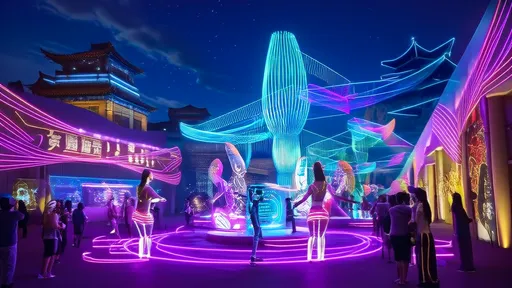
The Beijing Arts Festival, long revered as a crucible of contemporary creativity, has once again redefined its own boundaries, this time by orchestrating a symphony of the senses. This year's edition, more than a mere exhibition, has positioned itself as a laboratory for the future, where the very definition of an artistic 'scene' is being dismantled and rebuilt through the deliberate, intricate weaving of multisensory experiences. It is no longer sufficient to see; one must feel, hear, and even taste the art to fully comprehend its narrative.
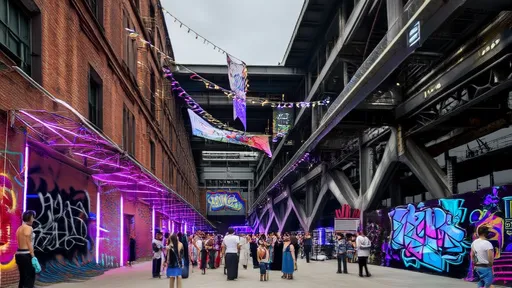
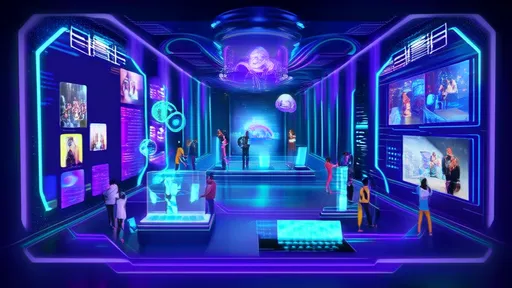
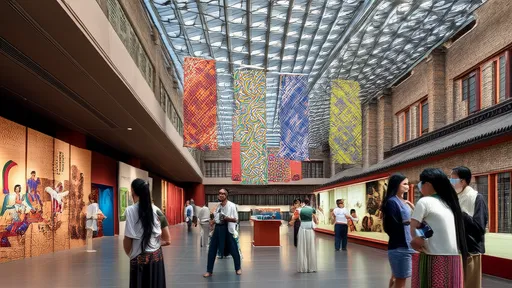
The traditional white-cube gallery space has been largely abandoned in favor of immersive environments that challenge the passive observer. Upon entering the main pavilion, visitors are immediately enveloped in a dynamic soundscape composed of ambient electronic music, whispered poetry, and the faint, rhythmic pulse of the city itself. This auditory layer is not a background element but an active participant, shaping the emotional trajectory of the encounter. The air carries subtle, curated scents—hints of ozone, aged paper, or damp earth—that shift from room to room, creating an olfactory map of the exhibition. This is not art to be viewed from a distance; it is an ecosystem to be inhabited.
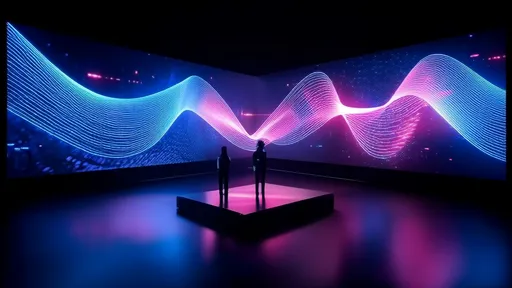
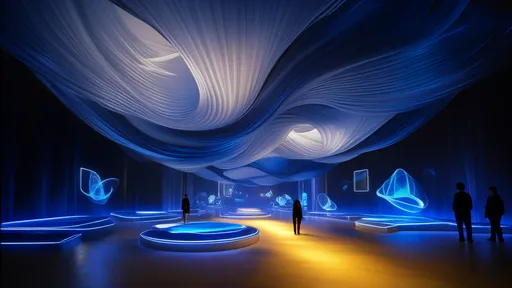
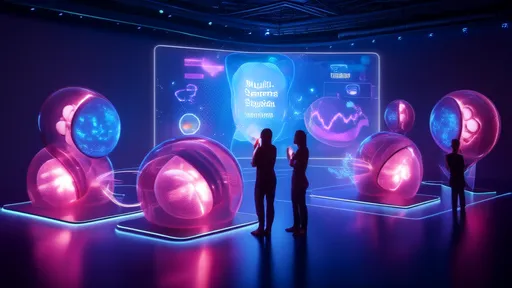
Central to this new paradigm is the work of collectives like Sensory Weavers, whose installation, "Chrono-somatic Resonance," is a landmark achievement. The piece is a cavernous, dark space where visitors don haptic suits. As they move, their gestures are translated into real-time visual projections on the walls—swirls of light that mimic their motion. Simultaneously, the suits provide gentle, corresponding tactile feedback; a sweeping arm might generate a sensation of brushing against silk, while a hesitant step could trigger a subtle vibration in the soles of the feet. The boundary between the creator and the audience dissolves. The art is not a static object but a collaborative event, a conversation between human movement and algorithmic response, felt as much as it is seen.
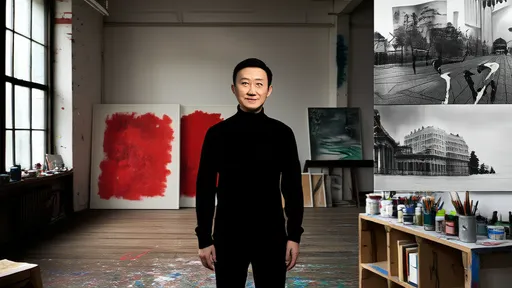
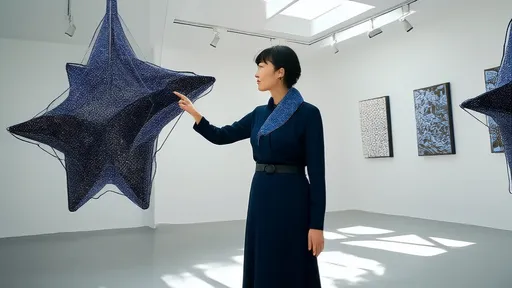
Another striking example is the "Gustatory Archive" by artist Li Wei, which boldly incorporates taste as a primary medium. Participants are invited to sample a series of small, meticulously crafted edible sculptures. Each morsel corresponds to a specific historical event or personal memory archived by the artist. A bitter-sweet gel might evoke the complex emotions of a farewell, while a spicy, effervescent cube encapsulates the chaotic energy of a protest. The experience is profoundly intimate and subjective, bypassing intellectual interpretation to create a direct, visceral connection to the past. It raises provocative questions about memory, history, and the body as a site of knowledge, proving that flavor can be a powerful, if unconventional, vessel for storytelling.
This multisensory approach is fundamentally redefining audience engagement. The passive consumption of art is replaced by active, embodied participation. Visitors are no longer spectators but co-creators and explorers. The festival's curators argue that in an age of digital saturation, the most profound artistic experiences are those that re-engage the physical body in its entirety. By demanding a full sensory investment, these works create deeper, more lasting impressions and foster a unique, personal connection that a purely visual encounter cannot achieve. The art becomes a memory written not just on the mind, but on the skin, in the ears, and on the tongue.
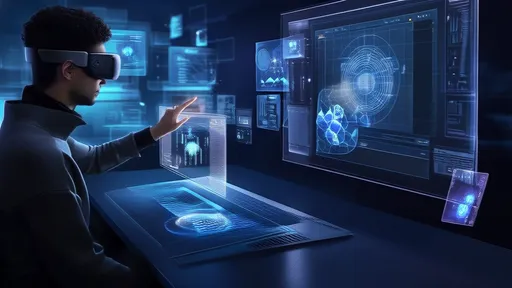
Technology serves as the invisible loom on which these sensory threads are woven. Advanced haptic interfaces, spatial audio systems, and olfactory diffusers are employed not as gimmicks but as essential tools for expanding the palette of artistic expression. Artificial intelligence is used to generate adaptive soundscapes and visuals that respond to the collective mood of the audience, making each visit unique. The tech is seamless, integrated so thoroughly that it fades into the background, allowing the human experience to take center stage. The focus remains firmly on the sensory and emotional impact, not on the machinery that enables it.
By championing this holistic, multisensory model, the Beijing Arts Festival is effectively defining a new scenography for future art. The "scene" is no longer a physical location with art objects placed within it. It is a temporary, permeable environment—a bubble of curated sensation where sight, sound, touch, smell, and taste converge to create a total work of art. This model has profound implications, suggesting a future where galleries, museums, and even public spaces are designed as sensory experiences first and visual displays second.
The success of this year's festival signals a significant shift in artistic priorities. It demonstrates a growing desire for art that engages the whole self, offering a refuge from the disembodied nature of screen-based media. The Beijing Arts Festival has not merely presented a collection of artworks; it has engineered a new reality for art itself, one where the future scene is felt, heard, and lived, as much as it is seen. It is a bold, compelling vision that promises to influence the global art landscape for years to come.
By /Sep 26, 2025
By /Sep 26, 2025
By /Sep 25, 2025
By /Sep 25, 2025
By /Sep 26, 2025
By /Sep 26, 2025
By /Sep 25, 2025
By /Sep 26, 2025
By /Sep 26, 2025
By /Sep 25, 2025

By /Sep 25, 2025
By /Sep 25, 2025
By /Sep 26, 2025
By /Sep 26, 2025
By /Sep 25, 2025
By /Sep 26, 2025

By /Sep 25, 2025
By /Sep 25, 2025
By /Sep 26, 2025
By /Sep 25, 2025
