The white-walled gallery, long the sanctum of silent contemplation, is undergoing a profound sensory revolution. The traditional mandate of "do not touch" is being systematically dismantled, replaced by an invitation to engage, to feel, to listen, and even to smell. This shift is driven by a powerful curatorial evolution centered on the concept of multisensory integration, a philosophy that posits art is not merely a visual spectacle but a holistic, embodied experience. At the forefront of this movement is the ambitious theme, "Polysensorial: Pioneering the Confluence of Art and Technology," a curatorial framework that is redefining the very ontology of the contemporary art encounter.
The term "Polysensorial" itself is a deliberate departure from the more clinical "multisensory." It implies a richness and complexity, a weaving together of perceptual threads into a tapestry of experience that is greater than the sum of its parts. This is not about simply adding sound to a painting; it is about creating environments where sight, sound, touch, proprioception, and even olfactory elements are intrinsically linked, each informing and altering the perception of the others. The curatorial vision here is bold: to move beyond the gallery as a passive container for objects and toward its realization as an active, responsive organism. This philosophy finds its most potent expression not in traditional media, but in the dynamic, code-driven realm of advanced technology. It is here, in the marriage of artistic vision with computational power, that the polysensorial ideal is being most vividly brought to life.
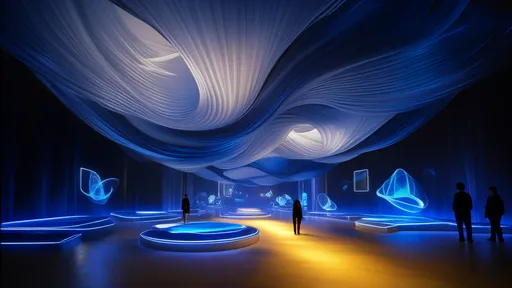
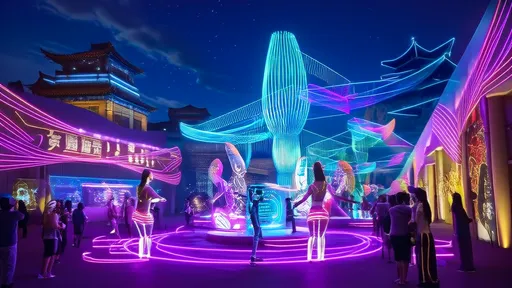
Imagine stepping into an installation where the floor is a vast, responsive LED surface. Your footsteps do not just echo; they generate ripples of light and cascading harmonies that shift in timbre based on your speed and weight. This is the work of collectives like teamLab, whose immersive digital ecosystems are prime exemplars of the polysensorial ethos. Their environments are living, breathing entities. A virtual flower blooms not on a predetermined loop, but under the "gaze" of a visitor, its growth accelerated by collective attention. The boundary between the artwork and the viewer dissolves; the viewer's body becomes the brush, their movement the composition. This is a radical democratization of the artistic process, facilitated entirely by complex algorithms and real-time data processing. The technology is not the spectacle; it is the invisible, enabling architecture for a deeply personal, somatic dialogue.
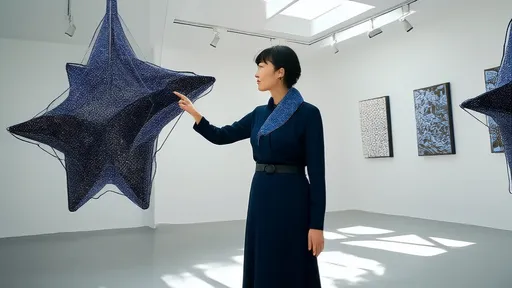
The engagement of the haptic sense—the sense of touch—is particularly revolutionary in challenging art's historical untouchability. Artists are employing technologies like haptic feedback systems and programmable matter to create works that can be felt. One might encounter a sculpture that appears to be solid stone but, upon touch, yields like flesh, its texture and resistance controlled by an embedded AI that responds to the pressure and temperature of the hand. Another project might use ultrasonic waves to create tangible shapes in mid-air, allowing visitors to literally feel a sound wave or grasp a virtual object. These experiences are fundamentally about embodied cognition—the understanding that we think with our bodies. By engaging the tactile sense, these artworks create memories that are muscular and visceral, not just retinal, forging a much deeper and more lasting connection than visual observation alone could ever achieve.
Furthermore, the polysensorial approach is delving into more elusive senses, such as olfaction and proprioception (the sense of one's body in space). Scent, with its direct link to the limbic system and memory, is being harnessed as a powerful narrative tool. An installation about urban decay might not just show images of derelict buildings but might use carefully engineered scent diffusers to evoke the smell of damp concrete, rust, and neglect. Conversely, a piece about a childhood memory could be suffused with the aroma of old books and rain. When synchronized with visual and auditory elements, scent completes the immersive illusion, transporting the viewer not just to a place, but to a specific moment in time, laden with emotional resonance.
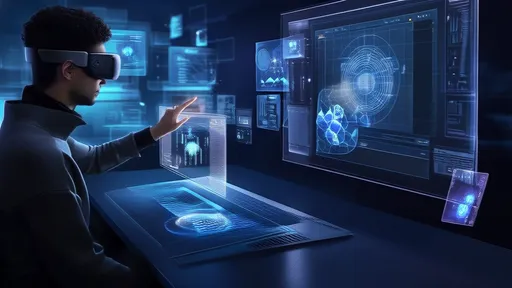
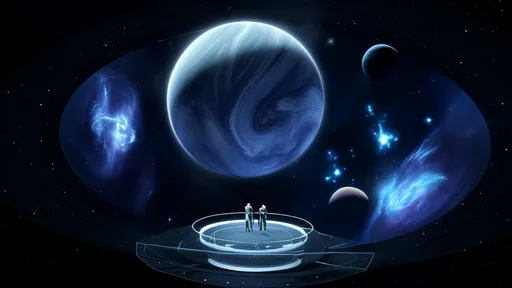
Proprioceptive art uses virtual and augmented reality, along with motion-capture technology, to play with the viewer's sense of self. In one VR experience, a user might look down to see the body of an animal or an alien entity, their own movements perfectly mapped onto this new form. This creates a profound, and sometimes unsettling, sense of embodiment that challenges the stability of identity. The artwork becomes a vehicle for exploring what it means to inhabit a body, pushing the boundaries of empathy and self-perception. This is a long way from looking at a painting on a wall; it is an active, psychological, and physical journey.
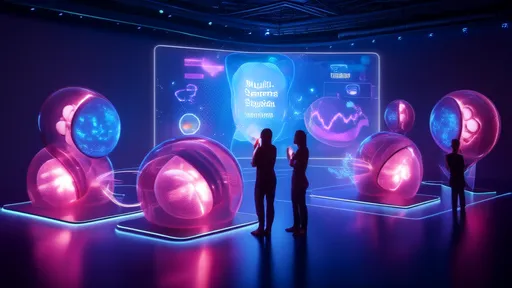
Underpinning this sensory explosion is a sophisticated technological infrastructure. Artificial Intelligence acts not just as a tool, but as a creative collaborator. Machine learning algorithms can analyze a visitor's biometric data—heart rate, gaze direction, even facial expressions—and adapt the artwork in real-time. A soundscape might become more agitated if the system detects anxiety, or a visual sequence might slow down to induce calm. This creates a feedback loop between the viewer and the work, a conversation where the artwork is genuinely responsive. The Internet of Things (IoT) connects various elements within an installation, ensuring that a change in one sensory modality seamlessly triggers a corresponding change in another. This complex orchestration is what separates a mere multimedia show from a truly integrated polysensorial experience.
The "Polysensorial" curatorial framework, therefore, represents a significant paradigm shift. It challenges the hegemony of the visual that has dominated Western art for centuries, arguing for a more inclusive and human-centric model of engagement. It recognizes that in an increasingly digital and disembodied world, there is a profound hunger for authentic, tangible experience. By leveraging cutting-edge technology not for its own sake, but in the service of deepening sensory and emotional connection, this movement is creating a new language for art. It is an art that you don't just see; you feel it in your bones, you hear it in your chest, you carry its scent with you when you leave. This is not the future of art; it is the vibrant, complex, and deeply engaging present, beckoning us to experience more, to feel more deeply, and to reconnect with the world through the full spectrum of our senses.
By /Sep 26, 2025
By /Sep 26, 2025
By /Sep 25, 2025
By /Sep 25, 2025

By /Sep 26, 2025
By /Sep 26, 2025
By /Sep 25, 2025
By /Sep 26, 2025
By /Sep 26, 2025
By /Sep 25, 2025
By /Sep 25, 2025
By /Sep 25, 2025
By /Sep 26, 2025
By /Sep 26, 2025
By /Sep 25, 2025
By /Sep 26, 2025

By /Sep 25, 2025
By /Sep 25, 2025
By /Sep 26, 2025

By /Sep 25, 2025
