In an era defined by climate uncertainty and technological acceleration, a new wave of forward-thinking art projects is emerging, challenging our perceptions of humanity's place within the natural and digital worlds. These are not mere exhibitions to be passively observed; they are dynamic, living systems that propose a radical reimagining of the relationship between nature, human ingenuity, and machine intelligence. Moving beyond dystopian narratives of technological domination or nostalgic yearnings for a pure, untouched wilderness, these projects explore the fertile ground of symbiosis, suggesting that our future survival and flourishing depend on learning to collaborate with, rather than conquer, the complex systems that surround us.
The traditional view of art often places the human artist at the center, as a solitary genius imposing form upon inert matter. This new paradigm, however, decentralizes the human role. Artists are becoming facilitators, ecosystem designers, and conductors of dialogues between biological and technological agents. They are creating works where the behavior of plants, the patterns of weather, the logic of algorithms, and the curiosity of humans all become equal participants in the creation of meaning and experience. This shift marks a profound evolution from art about nature to art with and as nature, integrated with the tools we have built.
One compelling frontier is bio-digital art, where living organisms and computational processes are fused into a single, cohesive entity. Consider projects that utilize microbial fuel cells, where bacteria break down organic matter to generate a small electrical current. This current, a direct product of biological metabolism, then powers delicate LED lights or influences the generation of soundscapes. The artwork's vitality is intrinsically linked to the health of its microbial community. If the bacteria thrive, the light glows brightly; if they languish, the piece dims. Here, technology does not replace life but serves as an amplifier and translator of its inherent processes. The artist sets the initial conditions, but the final aesthetic output is a co-creation between human design, biological agency, and electronic circuitry.
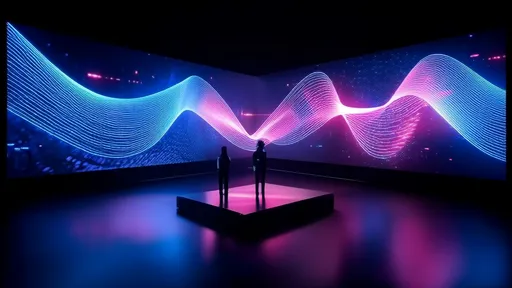
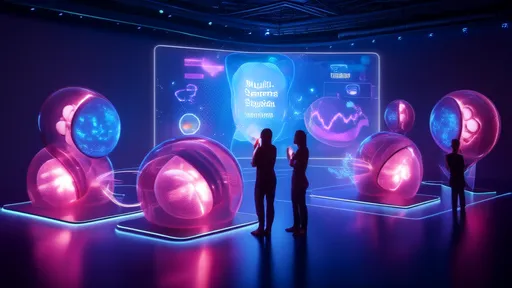
Another area of exploration involves using artificial intelligence not as a tool for mimicry, but as a partner in perceiving ecological patterns invisible to the human eye. Artists are training machine learning models on vast datasets of environmental information—decades of satellite imagery, real-time sensor readings from forests and oceans, or the complex vocalizations of animal species. The AI learns to identify subtle correlations and patterns of change that elude our linear perception. The resulting artworks might be immersive data visualizations that allow us to the stress signals of a forest or the shifting communication of whales in a warming ocean. In this context, technology acts as a sensory prosthesis, expanding our capacity for empathy and understanding towards non-human intelligences and the planet's macro-systems.
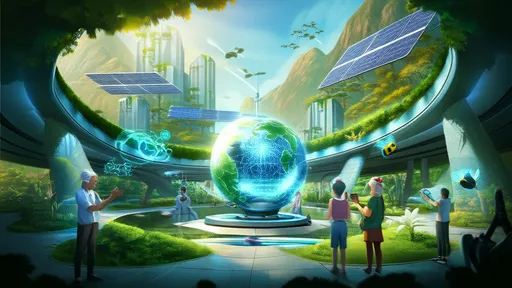
The concept of remediation is also being turned on its head. Instead of seeing technology as a source of pollution and separation from nature, artists are deploying it as a means of healing damaged environments. We see installations that use 3D-printed ceramic structures, designed through computational models that mimic coral growth, to provide new habitats for reef ecosystems. Drones are programmed not for surveillance but for reforestation, precisely planting seeds in areas inaccessible to humans. These projects reframe advanced technology as a form of thoughtful stewardship. They ask whether our most sophisticated tools, if guided by an ethic of care and reciprocity, can become instruments for repairing the ecological wounds inflicted by earlier, less-conscious industrial revolutions.
Furthermore, these artistic inquiries are deeply philosophical, forcing a confrontation with the very definition of life, consciousness, and creativity. When an algorithm evolves a novel form based on environmental data, or when a network of plants communicates through an interactive network, where does the artistry reside? Is creativity a uniquely human trait, or is it a fundamental principle of the universe, manifesting in the adaptive growth of a vine, the crystalline structure of a snowflake, and the learning algorithm of a neural network? By creating systems where agency is distributed, these artists challenge the anthropocentric hubris that has contributed to our current ecological crisis and open the door to a more humble, relational existence.
Critically, the most successful projects in this vein avoid technological fetishism. The technology itself is not the star; its elegance lies in its seamless integration and its service to a larger ecological or experiential goal. The focus remains on the quality of the interaction, the emergence of unexpected beauty, and the provocation of thought. The goal is not to present a slick, frictionless future, but to create spaces for contemplation about the messy, complex, and interdependent reality we inhabit. Visitors often leave these experiences not with answers, but with better questions: How can I listen to the non-human world? What does it mean to be a good ancestor? How can my actions contribute to a synergistic, rather than extractive, relationship with my environment?
Ultimately, these forward-looking art projects are vital rehearsals for the future. They are speculative models that allow us to physically and emotionally experience what a synergistic coexistence with technology and nature might feel like. They move the conversation from abstract theory to tangible sensation. In a world grappling with the consequences of separation—from each other, from other species, from the planet itself—this art offers a powerful antidote: a vision of deep interconnectedness. It suggests that the path forward is not a retreat from technology, but a deliberate, ethical, and creative weaving of it into the fabric of the living world, fostering a future where nature, humanity, and machine intelligence can evolve together in a dynamic and hopeful dance.
By /Sep 26, 2025
By /Sep 26, 2025
By /Sep 25, 2025
By /Sep 25, 2025
By /Sep 26, 2025
By /Sep 26, 2025
By /Sep 25, 2025
By /Sep 26, 2025
By /Sep 26, 2025
By /Sep 25, 2025
By /Sep 25, 2025
By /Sep 25, 2025
By /Sep 26, 2025
By /Sep 26, 2025
By /Sep 25, 2025
By /Sep 26, 2025

By /Sep 25, 2025
By /Sep 25, 2025
By /Sep 26, 2025

By /Sep 25, 2025
