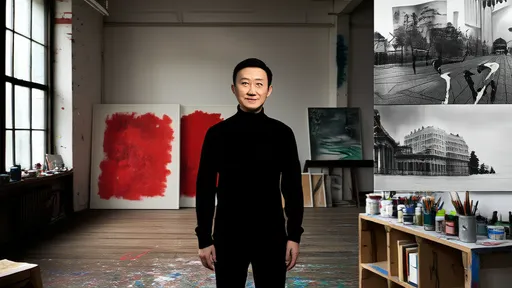
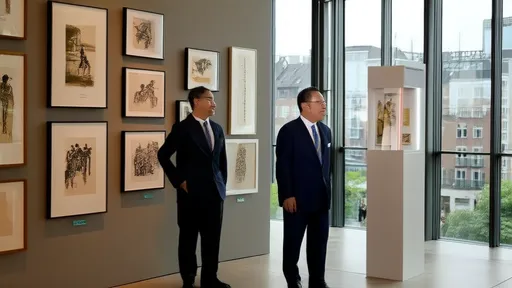
In the hushed halls where contemporary art converges with ancient craft, curator Huang Yan has unfurled a vision that is as profound as it is poetic. The latest Fiber Art Triennial, titled Reconstructing the Starry Sky, is not merely an exhibition; it is, in Huang’s own words, a deliberate and vital cultural practice. This framing elevates the event from a simple display of textile-based works to a dynamic, ongoing conversation about memory, materiality, and our place in the cosmos.
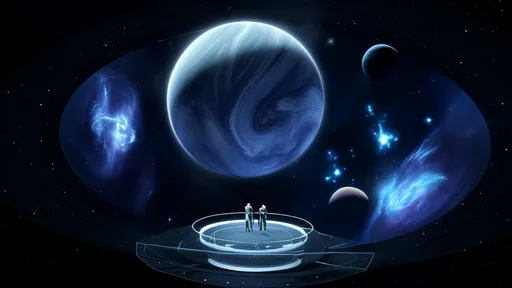
The theme itself is a powerful metaphor. To reconstruct the starry sky is to engage in an act of reclamation and re-imagination. It speaks to a desire to piece together fragmented narratives, to find patterns in the chaos of modern life, and to reconnect with a sense of wonder that urban light pollution often obscures. Huang Yan suggests that fiber art, with its inherent connection to touch, time, and tradition, is the perfect medium for this ambitious endeavor. The very process of weaving, knotting, and stitching mirrors the human impulse to create order and meaning, thread by thread, star by star.
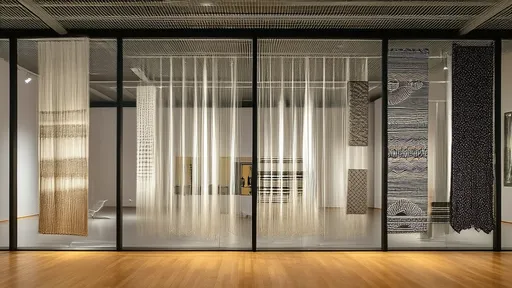
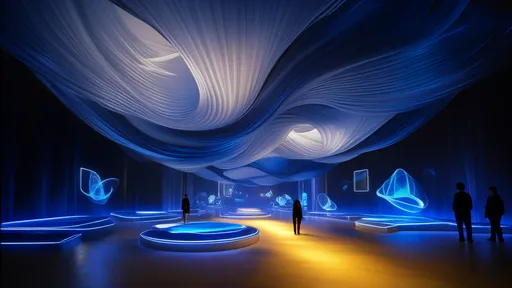
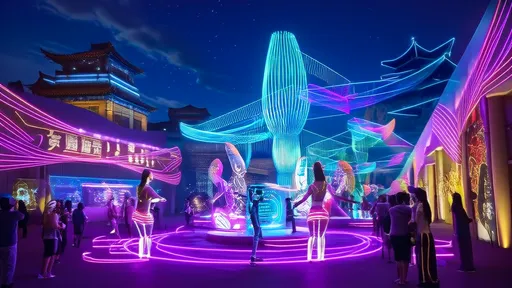
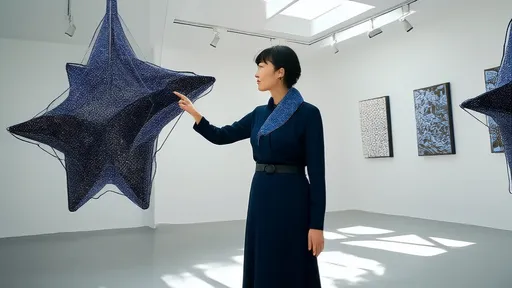
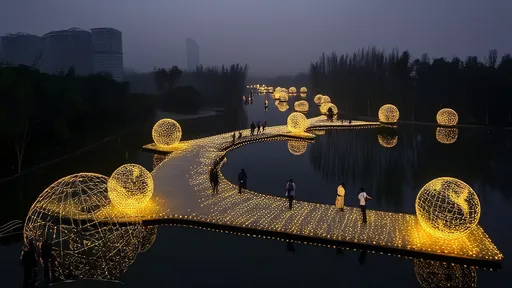
Walking through the triennial, one is immediately struck by the sheer diversity of interpretations. Some artists have taken the theme literally, using luminous threads, embedded LEDs, and reflective materials to create installations that shimmer and glow, inviting viewers to look up in awe. Others approach it more conceptually, using the warp and weft of their fabrics to map genetic codes, celestial charts, or complex data streams, suggesting that the constellations we seek can be found not only above us but within the very fabric of our existence. The materials themselves—silk, wool, hemp, recycled plastics, even digital components—become metaphors for the different elements that constitute our cultural and physical universe.
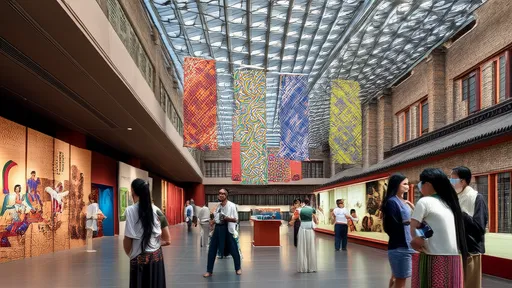
A central pillar of Huang Yan’s curatorial practice is the emphasis on cultural practice. This term implies something far more active and communal than a passive exhibition. It encompasses the dialogues between artists from different generations and backgrounds, the workshops where skills are passed down and reinvented, and the critical symposiums that dissect the role of craft in the digital age. The triennial becomes a temporary ecosystem, a living organism where creation, discussion, and education are inextricably linked. It is a space where the slow, meticulous labor of the hand challenges the rapid pace of contemporary consumption, proposing an alternative model of production and value.
This focus on practice also highlights the deeply human element of fiber art. Unlike the sterile perfection often associated with digital or industrial art forms, fiber works bear the traces of the maker’s hand. The slight irregularity in a weave, the tension in a knot, the subtle variation in dye—these are not flaws but testaments to presence and process. In attempting to reconstruct the starry sky, these artists are ultimately reconstructing a sense of human scale and intimacy within an increasingly vast and impersonal world. The artwork becomes a record of time spent, a personal constellation of effort and intention.
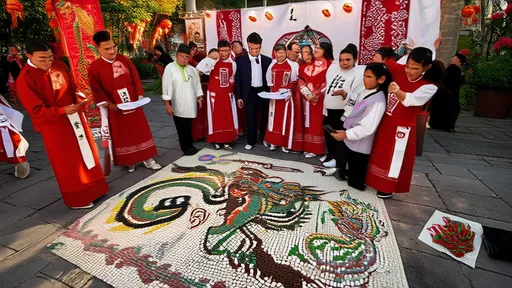
Furthermore, the theme resonates powerfully with issues of cultural heritage and globalization. For many artists, reconstructing the sky is an act of remembering and honoring ancestral knowledge. Traditional techniques like Chinese silk embroidery, Japanese boro mending, or Indigenous basket weaving are not presented as relics but as living languages, capable of articulating contemporary concerns. At the same time, the global nature of the triennial shows how these distinct cultural threads are being interwoven into a new, shared tapestry. The starry sky, after all, is a universal canvas, viewed and storied by every culture on Earth. This exhibition suggests that our collective future may depend on our ability to reconstruct it together, acknowledging both our unique perspectives and our common humanity.
The political dimension of this cultural practice should not be overlooked. In an era of environmental crisis, the choice of materials carries significant weight. Many artists prominently feature natural, sustainable, or upcycled fibers, making a silent commentary on waste and renewal. The act of careful reconstruction stands in stark opposition to the destructive forces of extraction and exploitation. Similarly, by elevating craft—a domain historically associated with women's labor and domesticity—to the level of high art and critical discourse, the triennial engages in a subtle but powerful act of feminist and sociological re-evaluation. It reconstructs not just a sky, but a more inclusive and equitable artistic hierarchy.
Ultimately, Reconstructing the Starry Sky is a testament to the enduring power of fiber as a medium of profound expression. Under Huang Yan’s thoughtful guidance, the triennial transcends its physical boundaries to become a meditation on hope. It proposes that even in the face of fragmentation and loss, we possess the tools to reweave our world, to find beauty and connection in the delicate threads that bind us to each other and to the universe. It is a slow, patient, and deeply human act of creation—a necessary cultural practice for our time.
The echoes of the triennial linger long after one leaves the gallery. It challenges the viewer to consider what constellations they are weaving in their own lives, what patterns they are creating, and what stories their hands are capable of telling. In urging us to look up and reconstruct our own starry skies, Huang Yan and the participating artists have gifted us not just with art to behold, but with a practice to embody.
By /Sep 26, 2025
By /Sep 26, 2025
By /Sep 25, 2025

By /Sep 25, 2025
By /Sep 26, 2025
By /Sep 26, 2025
By /Sep 25, 2025
By /Sep 26, 2025
By /Sep 26, 2025
By /Sep 25, 2025
By /Sep 25, 2025
By /Sep 25, 2025
By /Sep 26, 2025
By /Sep 26, 2025
By /Sep 25, 2025
By /Sep 26, 2025
By /Sep 25, 2025
By /Sep 25, 2025
By /Sep 26, 2025
By /Sep 25, 2025
