The recent expansion of Mexico's competitive gaming circuit has sent ripples far beyond its digital borders, marking a significant shift in the global esports landscape. What was once a regional qualifier tucked within broader Latin American tournaments has blossomed into a premier, standalone spectacle. This transformation is not merely a story of increased prize pools or more tournament slots; it is a profound narrative about cultural resonance. The world is tuning in, and in doing so, it is discovering the vibrant, passionate, and uniquely Mexican soul that fuels this competitive fire.
The catalyst for this growth can be traced to a confluence of strategic investment and organic, grassroots passion. Major game publishers and international sports networks, recognizing the untapped potential of the massive and deeply engaged Mexican fanbase, began to allocate significant resources. This wasn't a simple case of market expansion; it was a deliberate cultivation. Broadcasts were no longer mere translations of international feeds. Instead, they were reimagined with local talent—casters whose rapid-fire Spanish commentary, infused with regional slang and heartfelt emotion, created an electric atmosphere that resonated deeply with the domestic audience. This authenticity was the first spark.
As the production quality soared, so did the stakes. The Mexican League, or Liga Mexicana, evolved from a stepping stone into a destination itself. Top-tier organizations established permanent training facilities in Mexico City and Guadalajara, scouting and nurturing homegrown talent with a seriousness previously reserved for established esports nations like South Korea or the United States. These players, once aspiring amateurs streaming from their bedrooms, became local heroes. Their journeys—filled with familial sacrifice, intense training regimens, and triumphant victories—were chronicled in documentary-style features, humanizing the competition and weaving it into the fabric of national pride.
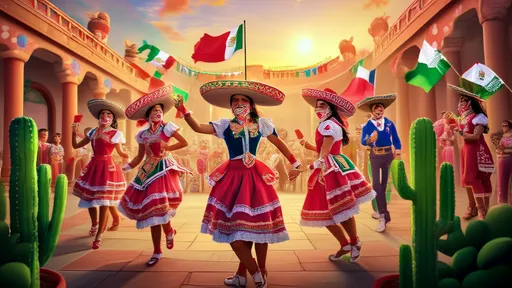
The true magic, however, lies in how this competitive platform has become a canvas for Mexican culture. This is where the event's influence transcends the game itself. The broadcast intervals, once dead air filled with generic electronic music, are now vibrant celebrations. They feature performances by popular regional Mexican artists, from Banda to Corridos Tumbados, their energetic rhythms providing a sonic backdrop that is unmistakably local. The visual identity of the league is a masterclass in cultural fusion, incorporating motifs from pre-Hispanic art, the bold palette of traditional textiles, and the dynamic aesthetics of modern Mexican graphic design.
This cultural showcase extends to the very language of the competition. The strategic jargon of the game is now peppered with phrases and concepts that hold specific meaning within Mexican society. A clever, unexpected play might be dubbed "un albur"—a nod to the complex and playful wordplay deeply ingrained in Mexican conversation. A comeback victory against overwhelming odds is celebrated as a display of "ganas", a term that conveys more than just desire; it speaks to heart, grit, and an indomitable spirit. This linguistic layer creates an intimate connection with the audience, making the broadcast feel like an inside joke shared among millions.
The impact of this culturally-rich presentation on the global audience has been profound. International viewers, accustomed to a more standardized, corporate esports experience, are captivated by the sheer passion on display. Social media lights up during broadcasts with comments from fans in Europe and Asia expressing admiration for the festive atmosphere, the charismatic players, and the infectious energy that seems to pulse from the arena. They aren't just watching a competition; they are getting a curated, exhilarating tour of contemporary Mexican youth culture. This has turned the Mexican league into an unexpected gateway, fostering a newfound appreciation and curiosity for the country's arts, music, and social dynamics.
Furthermore, this expansion has had a tangible empowering effect within Mexico. For a new generation of young Mexicans, success in esports is no longer an abstract dream confined to foreign shores. They see role models who look like them, speak like them, and share their background, achieving international fame and financial stability through skill and dedication. This has legitimized gaming as a viable career path in the eyes of parents and educators, leading to a surge in local gaming academies and university-sponsored teams. The cycle of growth is now self-perpetuating: a larger, more supported talent pool produces higher-level competition, which in turn attracts more viewership and investment.
The stadiums tell the final part of the story. When a major final is held at the Arena CDMX or the Estadio Akron, the event sells out within hours. The sea of green, white, and red flags, the collective roar that greets a spectacular play, the chants that echo through the concourses—it feels less like a sporting event and more like a national festival. This palpable, communal joy is the ultimate testament to the league's success. It proves that the expansion was not just about scaling up, but about digging deeper into what makes the community unique and amplifying that identity for the world to see.
In conclusion, the story of the Mexican esports scene's rise is a powerful case study in the globalization of culture in the digital age. It demonstrates that true influence is not achieved by diluting one's identity to fit a global mold, but by embracing and celebrating it with confidence. By weaving its rich cultural tapestry directly into the competitive framework, Mexico has not only created a more exciting and authentic product but has also positioned itself as a magnetic and influential force on the world stage. The league's expansion is a victory not just for Mexican gamers, but for the irresistible allure of Mexican culture itself, proving that in the connected world of today, the most compelling export can often be a nation's soul.
By /Sep 26, 2025

By /Sep 26, 2025

By /Sep 25, 2025

By /Sep 25, 2025
By /Sep 26, 2025

By /Sep 26, 2025
By /Sep 25, 2025

By /Sep 26, 2025
By /Sep 26, 2025

By /Sep 25, 2025

By /Sep 25, 2025
By /Sep 25, 2025

By /Sep 26, 2025
By /Sep 26, 2025
By /Sep 25, 2025

By /Sep 26, 2025
By /Sep 25, 2025

By /Sep 25, 2025
By /Sep 26, 2025
By /Sep 25, 2025
