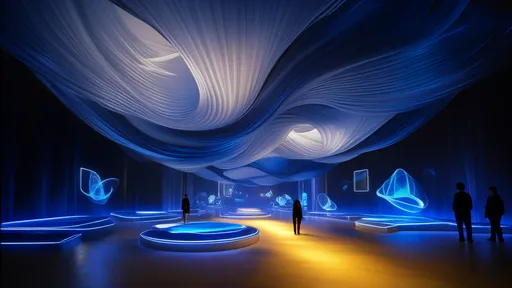
In a dimly lit gallery, visitors don't simply look at the art; they are enveloped by it. A low, resonant hum vibrates through the floor, a scent of petrichor and ozone fills the air, and a cascade of light responds to the slightest movement of a hand. This is not a scene from science fiction but a snapshot of the contemporary art world, where a profound shift is underway. The long-held primacy of the visual is being challenged, dismantled by artists who are leveraging technology to orchestrate experiences that engage the entire sensorium. We are witnessing a decisive turn from art as an object of contemplation to art as an environment of participation, a multisensory journey that redefines the very nature of aesthetic encounter.
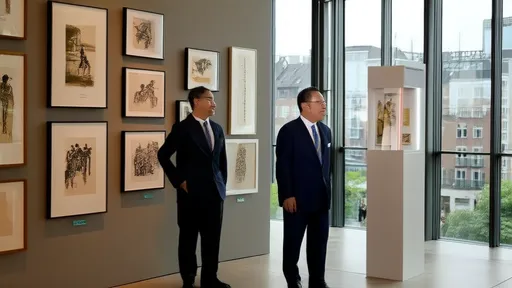
The traditional white cube gallery, with its sterile walls and hushed tones, was designed to isolate the artwork, to privilege the eyes above all else. For centuries, Western art history has been largely a history of vision—of painting, sculpture, and photography. The other senses were often considered secondary, even vulgar, in the context of high art. Smell, touch, and taste were relegated to the realms of craft, ritual, or the everyday. However, the advent of digital technology has acted as a powerful catalyst, breaking down these sensory hierarchies. Artists are no longer limited to canvas, marble, or film; they now have at their disposal a vast toolkit of sensors, projectors, speakers, and software that can translate data into sound, scent, and haptic feedback. This technological capability has converged with a growing philosophical and scientific understanding of perception as a holistic, embodied process. We do not see, hear, and feel in isolation; these streams of information are intricately woven together in the brain to create our reality. Contemporary art is now embracing this complexity, creating works that are not just seen but felt, heard, and even smelled.
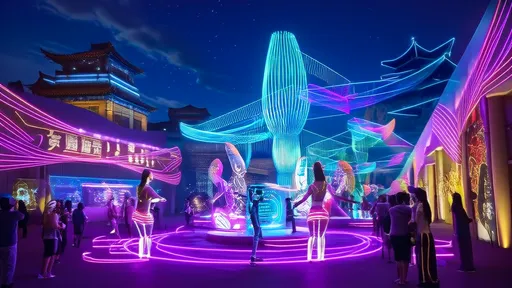
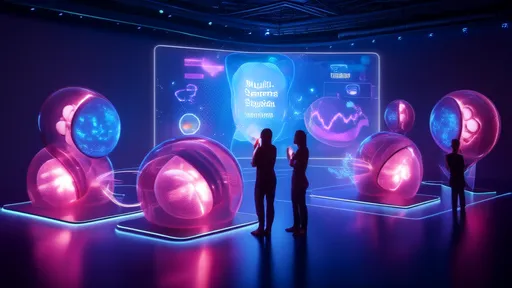
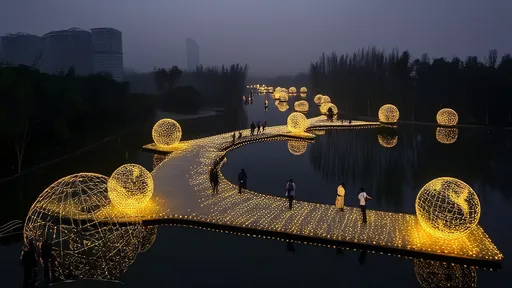
Interactive installations are at the forefront of this sensory revolution. These are environments where the audience's presence is not passive but integral to the completion of the work. The artwork becomes a dynamic system, a conversation between the participant and the technology. For instance, an installation might use motion-capture cameras to track visitors, translating their movements into evolving soundscapes or shifting patterns of light. The boundary between the observer and the observed blurs; the viewer becomes a performer, their body the instrument. This creates a deeply personal and ephemeral experience—no two encounters are exactly alike. The art exists only in the moment of interaction, emphasizing presence and physical engagement over detached analysis. It is an art of doing and feeling, rather than simply looking.
Sound, once a background element or an accompaniment, has been elevated to a primary medium. Immersive audio technologies, such as ambisonics and binaural recording, allow artists to sculpt sound in three-dimensional space. Visitors can walk through a sonic landscape where sounds have specific locations and movements, creating a powerful sense of immersion that rivals, and often enhances, the visual component. This sonic art is not merely about listening to a composition; it is about being inside it. The vibrations can be felt in the chest, the directionality of sound cues can disorient or guide, and the absence of sound can be as powerful as its presence. In this context, hearing is transformed from a passive reception of noise into an active, spatial, and fully embodied sense.
Perhaps the most radical frontier in this multisensory exploration is the incorporation of olfaction and gustation—smell and taste. These are our most ancient and emotionally potent senses, with direct neural pathways to the brain's memory and emotion centers. Artists are beginning to harness this power, using scent diffusers and edible components to evoke memories, trigger associations, and create narratives that are felt on a visceral level. An artwork might use the smell of old books to evoke a sense of history, or the taste of a specific spice to transport a participant to another place and time. This moves art beyond the intellectual and into the realm of the deeply personal and autobiographical. It acknowledges that our past experiences, our cultures, and our emotions are inextricably linked to sensory impressions that go far beyond the visual.
The role of the artist is consequently evolving from that of a sole creator to a conductor of experiences. They design the parameters of the system, choose the sensory elements, and write the algorithms that govern the interaction, but they ultimately relinquish a degree of control to the audience. The artwork is co-created in the moment of engagement. This requires a new kind of literacy from both the artist and the viewer. The artist must be part programmer, part composer, part scenographer, possessing a multidisciplinary understanding of technology, psychology, and aesthetics. The viewer, in turn, must be willing to step out of their comfort zone, to actively explore, touch, listen, and even taste, becoming a collaborator in the artistic process.
This shift towards total sensory participation carries profound implications. It democratizes art to an extent, making it more accessible to individuals with visual impairments, for whom traditional galleries can be exclusionary. It also prompts a deeper reflection on our relationship with technology itself. In an age of screen-based interaction, where so much of our lives is mediated through the flat, visual interface of a smartphone, these multisensory artworks re-embody our digital experiences. They remind us that we are physical beings in a physical world, and that technology can be used to deepen, rather than diminish, our sensory connection to reality.
The gallery of the 21st century is becoming less a temple for revered objects and more a laboratory for sensory exploration. It is a space where sight, sound, touch, smell, and taste converge to create rich, complex, and unforgettable experiences. This is not a fleeting trend but a fundamental reorientation of artistic practice. By activating the full spectrum of human sensation, contemporary art is moving beyond representation to create new forms of presence, connection, and understanding. The question is no longer just "What does it mean?" but increasingly, and more powerfully, "How does it feel?"
By /Sep 26, 2025
By /Sep 26, 2025
By /Sep 25, 2025
By /Sep 25, 2025

By /Sep 26, 2025
By /Sep 26, 2025
By /Sep 25, 2025
By /Sep 26, 2025
By /Sep 26, 2025
By /Sep 25, 2025
By /Sep 25, 2025
By /Sep 25, 2025
By /Sep 26, 2025
By /Sep 26, 2025
By /Sep 25, 2025
By /Sep 26, 2025

By /Sep 25, 2025
By /Sep 25, 2025
By /Sep 26, 2025

By /Sep 25, 2025
